When should a child begin to train, and why the old fear was wrong
Most parents think lifting weights is dangerous for children. Twenty years of paediatric consensus disagree, and the reason has more to do with the nervous system than with muscle.
Most parents think lifting weights is dangerous for children. Twenty years of paediatric consensus disagree, and the reason has more to do with the nervous system than with muscle.

Parents are told that writing by hand is vital for their child's growing brain, and that screens are eroding it. We sort the viral headlines from the solid evidence, and find the real benefit belongs to one group above all: children still learning their letters.
Your child's fussiness for food is mostly inherited, and most of the things parents try in order to fix it make it worse. Find out why young children refuse food, why it is rarely a parent's fault, and the unglamorous method that genuinely changes how they eat.
Most of what shapes a young life turns out to be joyful and ordinary. A major new study shows what teenagers themselves treasure, and why the way they answer can tell you how they are really doing.

Researchers asked more than a thousand young people, in their own words, to name the most important event in their lives. The large majority chose something positive and ordinary. And the way a young person answers turns out to reveal how they are doing.
Every few years, researchers in Zurich opened their survey to the same group of young people with a single open question. Think back over the last few years, they asked. What was, for you personally, the most important event in your life? There was no checklist, no menu of traumas and triumphs to tick. Just a blank space and an invitation to answer in their own words.
A new study in the Journal of Child Psychology and Psychiatry has now analysed thousands of those answers, and the headline finding cuts against decades of research on life events. When young people choose for themselves what mattered, the overwhelming majority name something good.
The data come from z-proso, a long-running study that has followed a diverse, multi-ethnic group of children in Zurich since 2004. The researchers drew on answers from 1,442 participants, each asked the same open question at ages 15, 17, 20 and 24, between 2013 and 2022. That produced 5,670 short written descriptions, which the team sorted into themes using a form of natural language processing called topic modelling, then checked and corrected by hand.
Of those 5,670 events, 83 per cent were positive in tone. Only around one in sixteen were negative. Most were not dramatic at all. They were the ordinary things that happen when growing up: passing exams, starting an apprenticeship, making a close friend, falling in love, taking a trip, moving into a first flat.
This matters because most life-event research, and a good deal of parental worry, is built around adversity. Standard questionnaires tend to ask about loss, illness, conflict and upheaval, which assumes that the events shaping a young life are the bad ones. By letting young people speak for themselves, this study shows the opposite. The milestones they treasure are mostly happy and unremarkable, and that points to something parents can use.
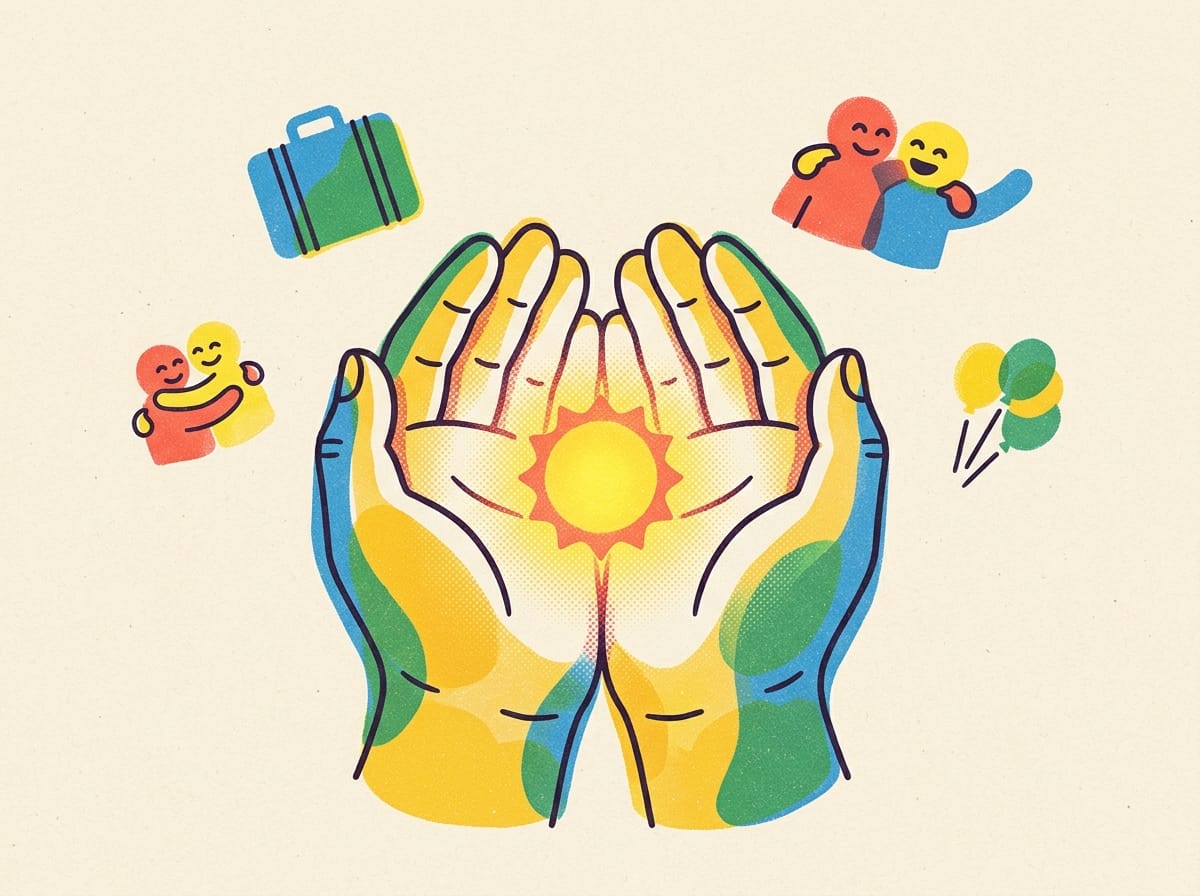
School, education and apprenticeships dominated, accounting for almost half of everything mentioned. (Switzerland's apprenticeship system is unusually central to its teenagers, which shapes the picture.) Friendships and romantic relationships came next at around 12 per cent, followed by personal development and mental wellbeing at roughly 8 per cent, and travel at about 7. The mix also shifted with age. At 15 and 17, school, friendships, sport and going out loomed largest. By 20 and 24, work, moving out, learning to drive and starting families had moved to the centre.
The second finding is the one that matters most for parents. A young person's mental health shaped not only whether they remembered an event as good or bad, but which event they picked as most important in the first place. Those reporting more anxiety and depression were more likely to name an interpersonal or stressful experience, a difficult relationship, a family upheaval, a bereavement, and less likely to name an achievement at school, a trip or a sporting success. They were also markedly more likely to recall their chosen event as negative, and less likely to recall it as positive.
The researchers are careful about what this means. The study captures associations at a single moment, so it cannot show that low mood causes a darker memory or the reverse. The likely traffic runs both ways: distress can pull attention towards what has gone wrong, through well-documented memory biases, while genuinely hard events can themselves feed later distress.
Two practical ideas follow. The first is that ordinary good experiences may be more than pleasant extras. A team, a holiday, a celebration, a friendship that deepens: the study cannot prove these protect mental health, but they are exactly the experiences young people themselves rate as formative, and they are often the first things to fall away when family life gets crowded. They are worth protecting.
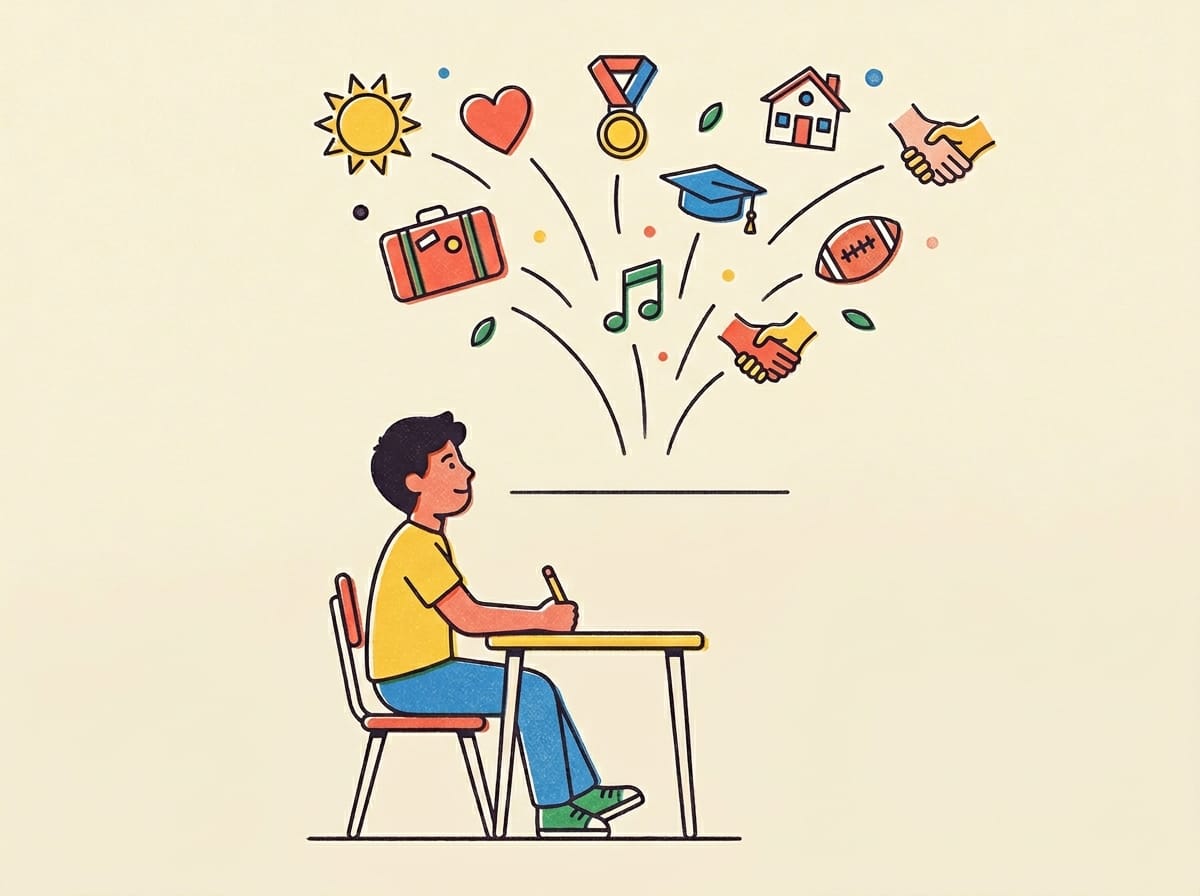
The second is simpler still. The way a young person answers a question like "what's been the biggest thing for you lately?" can be a small window onto how they are doing. A teenager who keeps returning to what went wrong, and struggles to name anything good, may be telling you something worth hearing.
The usual cautions apply. Participants named only one event per wave, the cohort is urban and Swiss, and some answers were tied to their moment, from Justin Bieber concerts to the pandemic and the war in Ukraine. Topic-modelling methods are also still maturing.
Still, the message is unusually hopeful for a field that spends most of its time studying harm. Asking a young person what mattered to them, and listening to the shape of the answer, costs nothing at all.
2026, Bürgin et al., Personally meaningful life events from adolescence to young adulthood: a longitudinal natural language processing analysis, Journal of Child Psychology and Psychiatry
2026, Haag et al., Thinking about tomorrow: a population-based natural language processing analysis of young adults' hopes and worries for the future, Journal of Affective Disorders
2022, Ribeaud et al., Cohort Profile: The Zurich Project on the Social Development from Childhood to Adulthood (z-proso), Journal of Developmental and Life-Course Criminology

Most parents think lifting weights is dangerous for children. Twenty years of paediatric consensus disagree, and the reason has more to do with the nervous system than with muscle.

Parents are told that writing by hand is vital for their child's growing brain, and that screens are eroding it. We sort the viral headlines from the solid evidence, and find the real benefit belongs to one group above all: children still learning their letters.

Your child's fussiness for food is mostly inherited, and most of the things parents try in order to fix it make it worse. Find out why young children refuse food, why it is rarely a parent's fault, and the unglamorous method that genuinely changes how they eat.

Chronic pain in children is more common than being left-handed. And adults are surprisingly bad at reading how much pain a child is in. This is what all parents should know.
