When should a child begin to train, and why the old fear was wrong
Most parents think lifting weights is dangerous for children. Twenty years of paediatric consensus disagree, and the reason has more to do with the nervous system than with muscle.
Most parents think lifting weights is dangerous for children. Twenty years of paediatric consensus disagree, and the reason has more to do with the nervous system than with muscle.

Parents are told that writing by hand is vital for their child's growing brain, and that screens are eroding it. We sort the viral headlines from the solid evidence, and find the real benefit belongs to one group above all: children still learning their letters.
Your child's fussiness for food is mostly inherited, and most of the things parents try in order to fix it make it worse. Find out why young children refuse food, why it is rarely a parent's fault, and the unglamorous method that genuinely changes how they eat.
Your child's fussiness for food is mostly inherited, and most of the things parents try in order to fix it make it worse. Find out why young children refuse food, why it is rarely a parent's fault, and the unglamorous method that genuinely changes how they eat.

A child's fussiness for food is mostly inherited, settled long before the first argument over vegetables. That sounds like bad news for parents, until you understand what it means and what actually changes how a child eats.
Picture a four-year-old at the table with a plate of something green in front of them. They have decided the green thing is dangerous, and nothing will persuade them to put it in their mouth. The parent tries reason, then encouragement, then a deal involving pudding, then the line their own mother used on them: you are not leaving this table until you have eaten it. The child holds out. Dinner ends without a winner, and the parent goes to bed certain they have done something wrong.
Few things worry parents of young children more, and few are more misunderstood. The reassuring news from the past few years of research is that the worry is mostly misplaced.
The harder news is that the things parents reach for to fix the problem tend to make it worse. The evidence now shows why young children refuse food, why it is rarely a parent's fault, and what actually moves a child from refusal towards acceptance.
The research reveals two key findings. The first is that fussy eating is mostly inherited, which means a parent's cooking, discipline or warmth is not the cause. The second is that even though fussiness is largely genetic, a child can still be helped towards new foods by one plain, well-tested method, while pressing a child to eat, the thing most parents do on instinct, makes the problem worse.
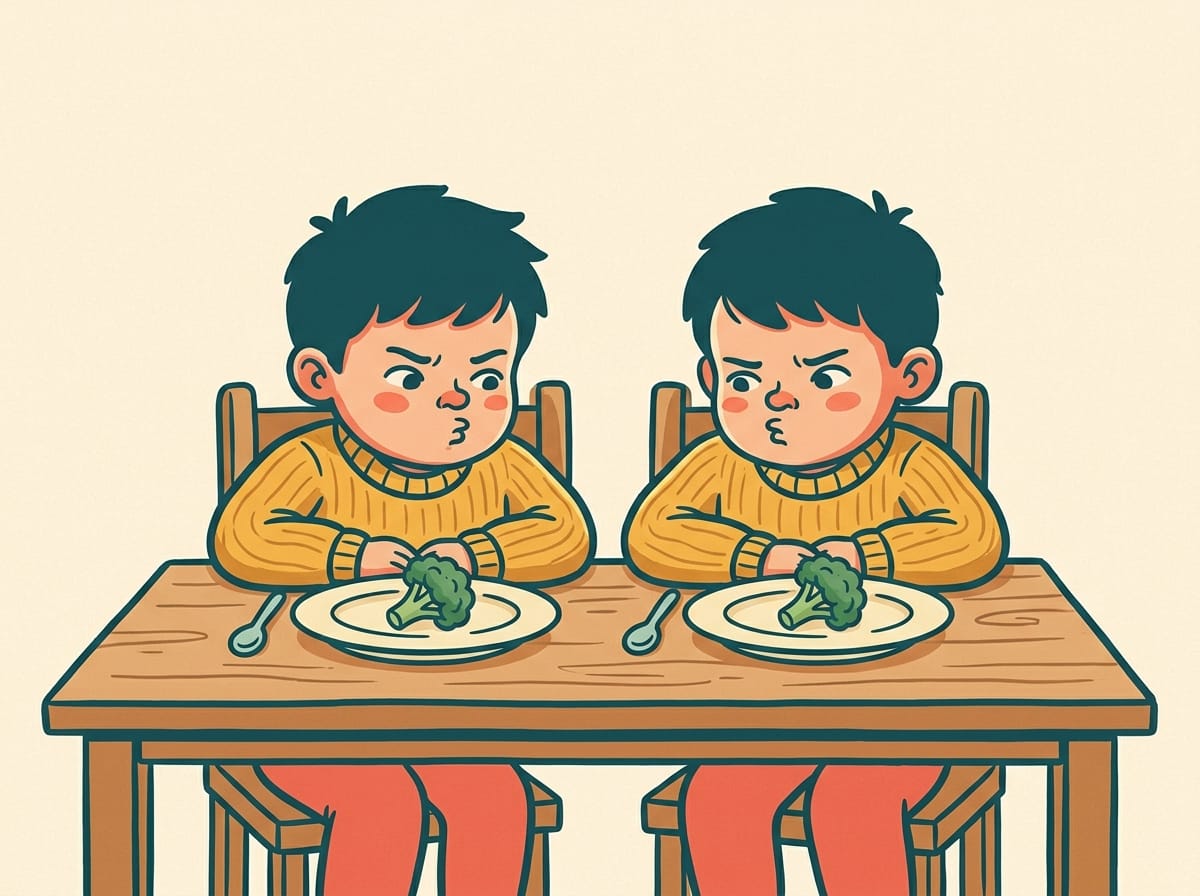
A normal stage, not a verdict
Before any method, it helps to know that early food refusal is developmentally ordinary. Most children go through a phase of rejecting unfamiliar foods, often sharply, between the ages of two and six. The technical name is food neophobia, the fear of new foods, and it tends to arrive just as a toddler becomes mobile enough to put unknown things in their mouth. A small child who spits out an untested vegetable is not being difficult. They are doing something that once kept young children alive: refusing to swallow anything they do not recognise.
The clearest account of how this unfolds comes from a 2024 twin study of nearly five thousand British children, published in the Journal of Child Psychology and Psychiatry. Following fussiness from sixteen months to thirteen years, the researchers found that children moved through a single common pattern: fussiness rose from toddlerhood to around age seven, then eased slightly into early adolescence. For most families, fussiness peaks and then improves. The phase tends to pass.
Why it is mostly not your fault
The same study is the clearest evidence yet that children are born fussy more than they are made fussy. The study's design is worth understanding, because it is what gives the finding its force.
The researchers used Gemini, a study of 4,804 twins born in England and Wales in 2007. Twin studies compare identical twins, who share almost all their genes, with non-identical twins, who share about half. When identical twins resemble each other much more closely than non-identical twins do, genetic influence is the simplest explanation. Parents rated their children's fussiness on a validated questionnaire at five points across childhood.
The numbers were striking. Genetic differences between children explained around 60 percent of the variation in fussiness at sixteen months, rising to between 74 and 84 percent from age three onwards. Shared environment, which covers everything siblings in the same home have in common, including the food on offer and the habits around the table, mattered only in toddlerhood, where it explained about a quarter of the differences between children. After that its measurable effect fell to nothing.
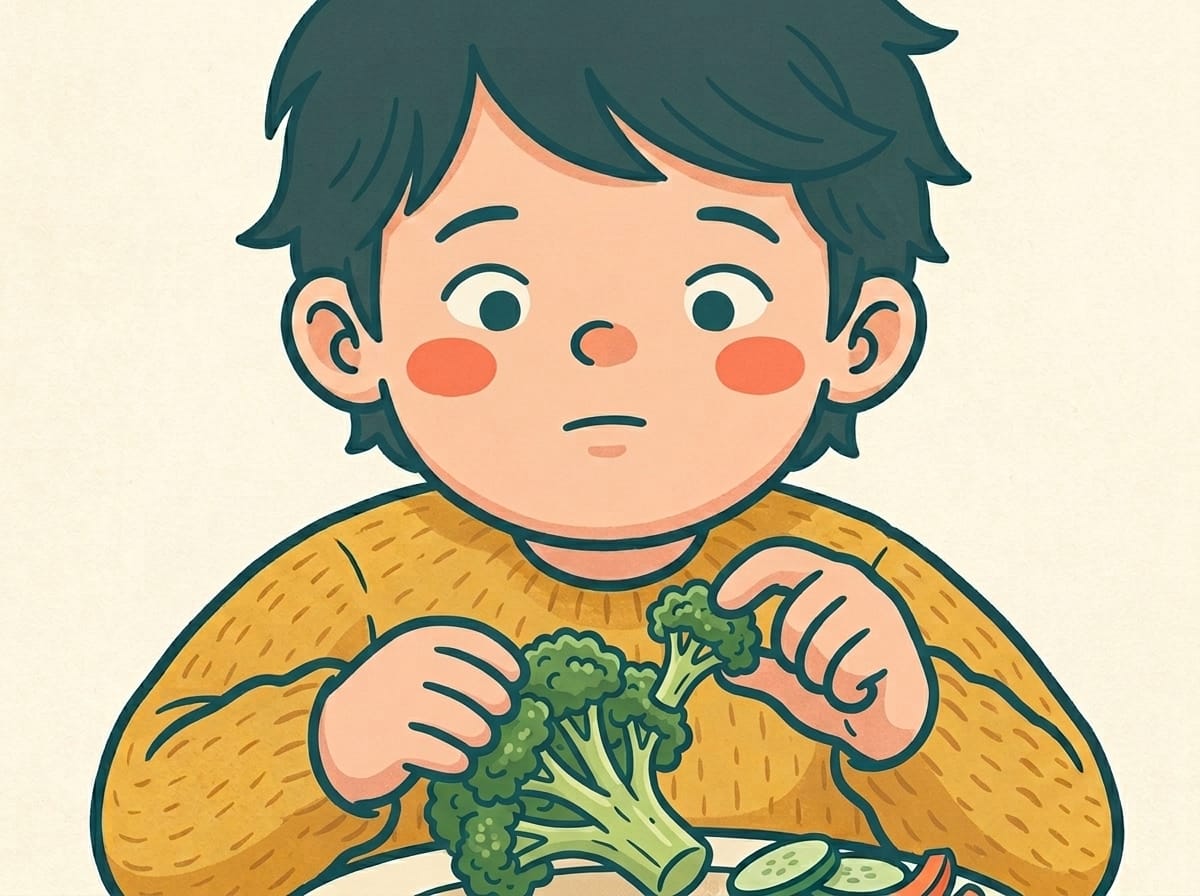
The authors stated the implication plainly: parents are not to blame for a child's innate fussiness. A reader who has spent two years assuming their cooking or their patience was the problem can let that assumption go. A child's fussiness is mostly something they were born with.
Two cautions keep this accurate. Heritability describes variation across a whole population, not any single child, and it does not mean fixed. As one of the study's senior authors, Alison Fildes, noted, a strong genetic component does not make fussiness permanent. And the measure was a parent questionnaire rather than direct observation of meals, which can bias what gets reported.
The main finding, that genes dominate, matches earlier twin research and is unlikely to be overturned, but the exact percentages are best read as estimates.
The move that makes it worse
Genes account for most of it, but what a parent does still matters at the edges, and the most useful thing parents can do is hold back. The best-supported mistake is pressure.
In a much-cited experiment with preschoolers, published in Appetite in 2006, researchers had children eat a food under two conditions, one neutral and one in which an adult repeatedly urged them to finish. The children ate more when they were left alone, and they made far more negative comments about the food when they were pushed. Urging a child to eat, the kind of urging every loving parent does, reduced the intake it was meant to raise and made the child like the food less.
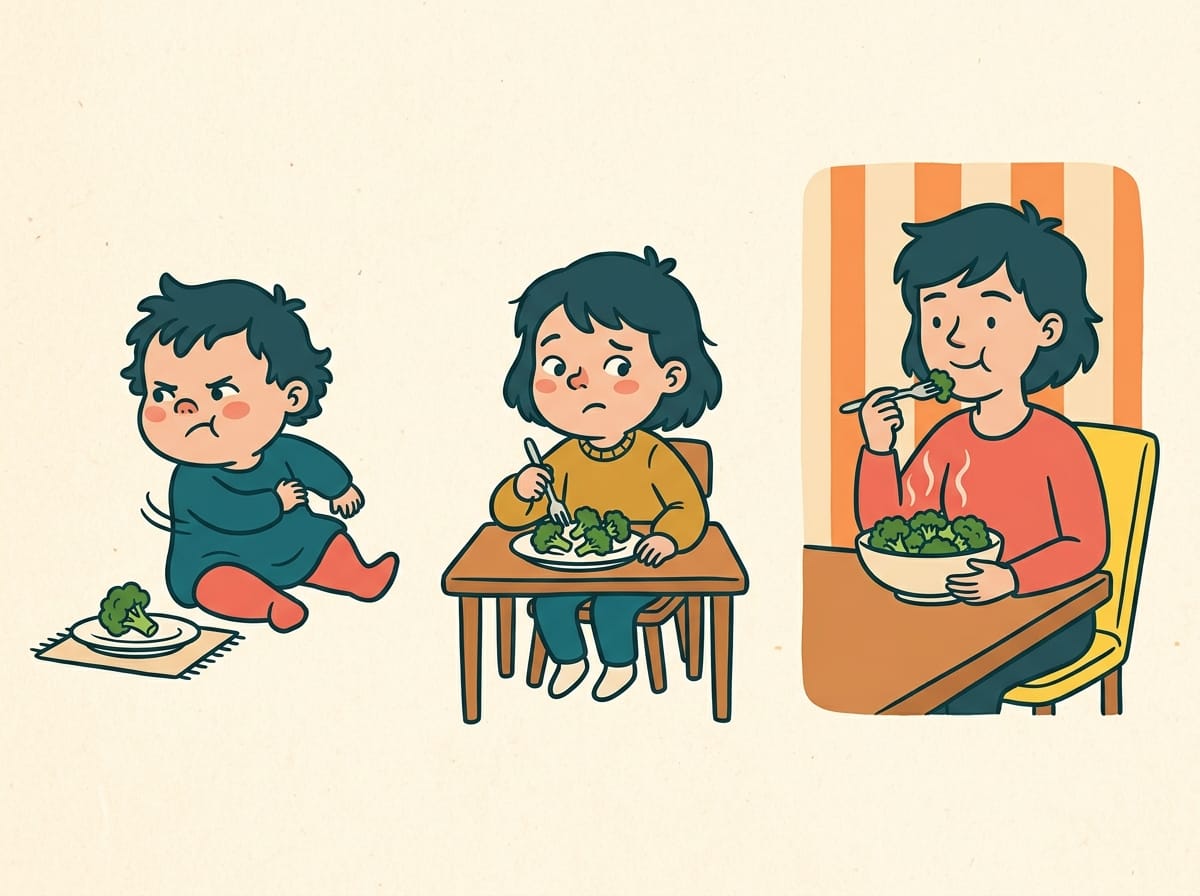
The parents most likely to push are those whose children eat least, which sets up a painful loop. Worry about a thin or picky child leads to urging; urging lowers intake and deepens dislike; the child eats less, and the worry grows. Longer-term studies suggest that pressure predicts more fussiness later, not less, so the loop tightens over time.
Bribery is more complicated, because the evidence is split rather than damning. A small token reward, a sticker, for trying a taste can help a reluctant child take the first bite, and the first bite is where acceptance starts. The trouble begins when one food is used to buy another. A child told they can have ice cream once they finish their broccoli learns that the ice cream is the prize and the broccoli is the price, which raises the appeal of the pudding and lowers the appeal of the vegetable. The useful line to hold is between rewarding the small act of tasting and bargaining with the food itself.
What actually works
The method with the strongest evidence behind it is also the least exciting. A parent offers a small taste of the same food, calmly, again and again, with nothing riding on it.
The foundational trial was run by Jane Wardle and colleagues at University College London and published in Appetite in 2003. They recruited 156 parents of two to six year olds, picked a vegetable each child disliked, and asked one group of parents to offer their child a small taste of it every day for fourteen days. Compared with a group given nutritional advice and a group given nothing, the daily-tasting group's children liked the vegetable more, ranked it higher, and ate more of it. Offering the taste, with no pressure and no reward, was enough.
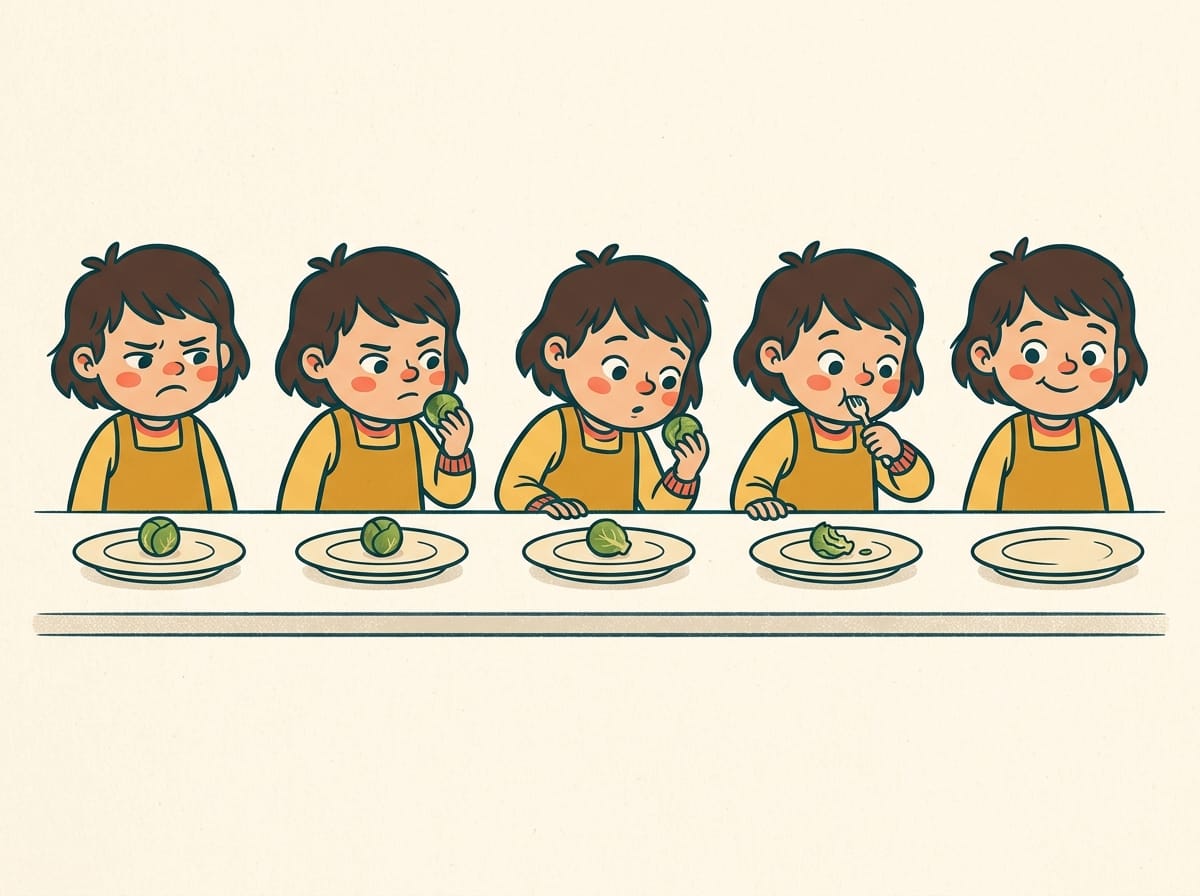
A later trial from the same group showed how little it takes. Posting parents of three year old twins a set of printed instructions was enough to raise children's acceptance of a disliked vegetable, which suggests families can do this at home without a clinic or a programme.
The reason it works is familiarity. A child treats a new food as a possible threat and a familiar food as safe, and the only way an unknown food becomes familiar is contact: seeing it, touching it, tasting a fragment, meeting it on the plate without anything bad happening. With each taste, the child learns the food does no harm, grows less wary, and often comes to like it.
The difficulty is the number of tastings needed, and it is where most families stop too soon. Research on preschoolers suggests a new food commonly takes between eight and fifteen tastings before a child accepts it, and more for the most wary children. Studies of real family meals find that parents usually give up after three to five attempts, and in some cases after one or two. The gap between the five tries a parent gives and the fifteen the child needs is, for many families, the whole problem. The food was close to being accepted when the parent gave up on it.
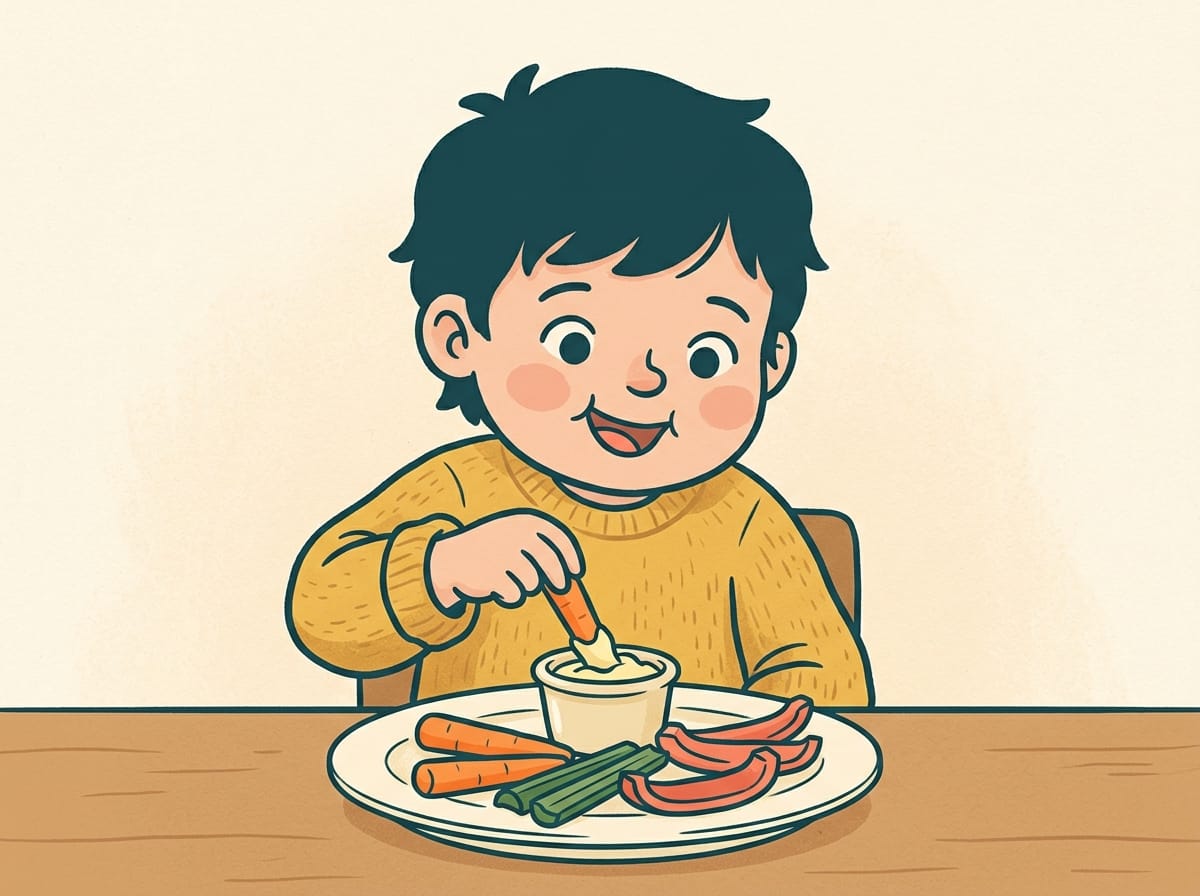
Two refinements help. Children who are especially sensitive to bitterness, a trait with its own genetic basis, will eat more of a sharp-tasting raw vegetable when they are offered a familiar dip with it, which makes the first encounter easier. And children copy the people around them, so a parent who visibly eats and enjoys the same food is more persuasive than any instruction.
The early months, without the guilt
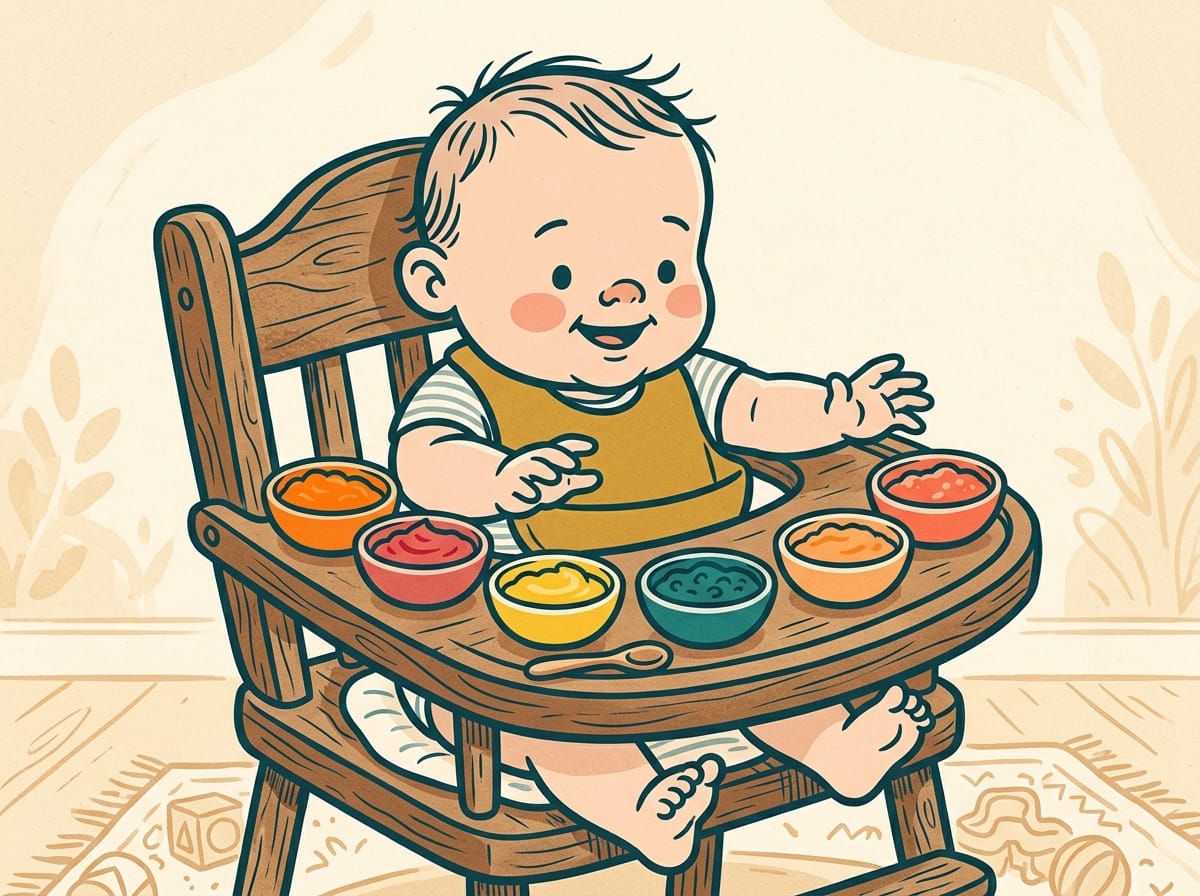
Children start forming food preferences very early, earlier than most parents realise. Flavours from a mother's diet reach the baby before birth through the amniotic fluid, and afterwards through breast milk, and infants exposed this way accept those flavours more readily when they meet them as solid food. The start of solids is a second chance to broaden a child's range. A study following children from five months to six years found that variety early in weaning, moving through different vegetables rather than settling on one, predicted greater willingness to accept new foods years later.
This is useful for parents at the start and should not become a new regret for parents further along. The tasting trials above were run on children aged two to six, well past weaning, and they worked. The early months are the easiest time to broaden a child's tastes, but they are not the only time.
What this means at your table
The honest summary is modest, which is its own kind of relief. Repeated tasting is not a cure, and the studies behind it report real but moderate effects. Liking tends to rise by about a point on a simple rating scale rather than transforming overnight, more liking does not always lead straight to more eating, and the most fearful children need the most patience. Anyone promising a reliable way to make a child love broccoli is selling something the evidence does not support.
What the evidence does support is a different way to see the problem. A fussy child has a temperament they were largely born with, and most children grow out of it. The task is not to win the meal but to keep offering, without pressure and without bargaining, for far longer than feels reasonable, while letting the child watch the adults eat the same food and enjoy it. The nightly argument is real, but it is not a judgement on anyone's parenting, and repetition will do more to end it than force ever will.
2024, Nas, Herle, Kininmonth, Smith, Bryant-Waugh, Fildes and Llewellyn, Nature and nurture in fussy eating from toddlerhood to early adolescence: findings from the Gemini twin cohort, Journal of Child Psychology and Psychiatry.
2006, Galloway, Fiorito, Francis and Birch, ‘Finish your soup’: Counterproductive effects of pressuring children to eat on intake and affect, Appetite.
2003, Wardle, Cooke, Gibson, Sapochnik, Sheiham and Lawson, Increasing children's acceptance of vegetables; a randomized trial of parent-led exposure, Appetite.
2014, Fildes, van Jaarsveld, Wardle and Cooke, Parent-administered exposure to increase children's vegetable acceptance: a randomized controlled trial, Journal of the Academy of Nutrition and Dietetics.
2013, Remy, Issanchou, Chabanet and Nicklaus, Repeated exposure of infants at complementary feeding to a vegetable puree increases acceptance as effectively as flavor-flavor learning and more effectively than flavor-nutrient learning, Journal of Nutrition.
2012, Fisher, Mennella, Hughes, Liu, Mendoza and Patrick, Offering “dip” promotes intake of a moderately-liked raw vegetable among preschoolers with genetic sensitivity to bitterness, Journal of the Academy of Nutrition and Dietetics.
2001, Mennella, Jagnow and Beauchamp, Prenatal and postnatal flavor learning by human infants, Pediatrics.
2016, Maier-Nöth, Schaal, Leathwood and Issanchou, The lasting influences of early food-related variety experience: a longitudinal study of vegetable acceptance from 5 months to 6 years in two populations, PLOS ONE.
2017, Holley, Farrow and Haycraft, A systematic review of methods for increasing vegetable consumption in early childhood, Current Nutrition Reports.

Most parents think lifting weights is dangerous for children. Twenty years of paediatric consensus disagree, and the reason has more to do with the nervous system than with muscle.

Parents are told that writing by hand is vital for their child's growing brain, and that screens are eroding it. We sort the viral headlines from the solid evidence, and find the real benefit belongs to one group above all: children still learning their letters.

Most of what shapes a young life turns out to be joyful and ordinary. A major new study shows what teenagers themselves treasure, and why the way they answer can tell you how they are really doing.

Chronic pain in children is more common than being left-handed. And adults are surprisingly bad at reading how much pain a child is in. This is what all parents should know.
