When should a child begin to train, and why the old fear was wrong
Most parents think lifting weights is dangerous for children. Twenty years of paediatric consensus disagree, and the reason has more to do with the nervous system than with muscle.
Most parents think lifting weights is dangerous for children. Twenty years of paediatric consensus disagree, and the reason has more to do with the nervous system than with muscle.

Parents are told that writing by hand is vital for their child's growing brain, and that screens are eroding it. We sort the viral headlines from the solid evidence, and find the real benefit belongs to one group above all: children still learning their letters.
Your child's fussiness for food is mostly inherited, and most of the things parents try in order to fix it make it worse. Find out why young children refuse food, why it is rarely a parent's fault, and the unglamorous method that genuinely changes how they eat.
Parents are told that writing by hand is vital for their child's growing brain, and that screens are eroding it. We sort the viral headlines from the solid evidence, and find the real benefit belongs to one group above all: children still learning their letters.

Parents are told that writing by hand is vital for healthy brain development, and that screens are eroding it. The research is more interesting than the headlines, and the clearest benefits turn out to belong to one group above all: children who are still learning their letters.
A five-year-old grips a pencil too hard and drags it slowly around the shape of a letter, tongue between teeth, while a tablet that could produce the same letter in an instant sits a few inches away. The parent watching wonders whether the struggle is worth it, or whether handwriting is a skill on its way out, like joined-up cursive or reading an analogue clock.
It is a fair question to ask now. Schools have cut the hours children spend forming letters, several countries have dropped cursive from the curriculum, and a child today will do most of their writing on a screen. The screen may not be the end of it either: voice-to-text already turns speech into writing well enough that a child now learning to type may spend much of their adult life dictating instead, with the keyboard following cursive into the past.
Into that shift came a wave of headlines making the opposite case: that writing by hand is vital for the developing brain, and that keyboards are costing children something important. The evidence now shows when that worry is justified, when it is overblown, and what writing by hand actually does for a child.
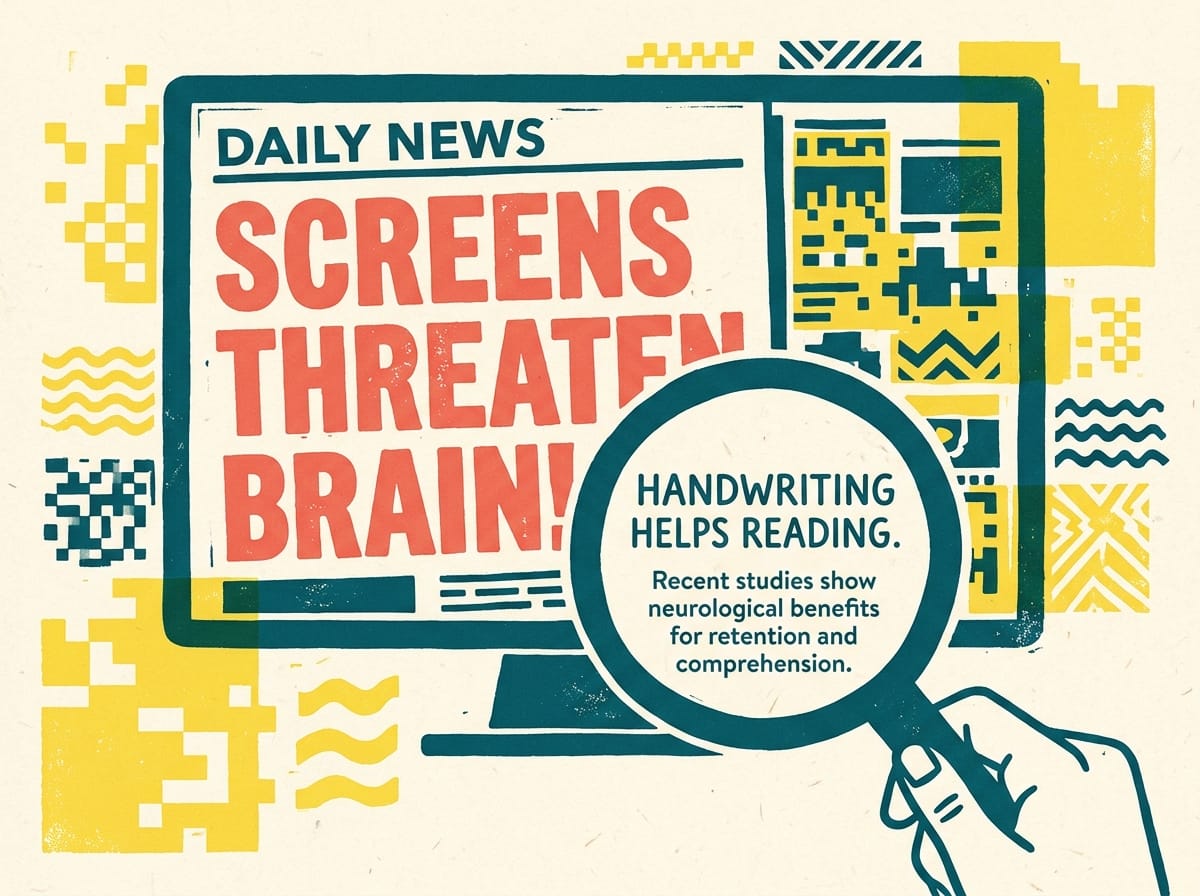
The honest answer depends on the age of the child and on what we are asking handwriting to do. The most reliable findings, from brain-imaging and letter-learning studies of young children, point one way: forming letters by hand helps a child learn to read. That benefit is clearest in the youngest children, the ones still learning their letters, and it has little to do with the sweeping brain claims now circulating.
For older children, the benefit is much weaker, and the studies most often cited to prove it have largely failed when other researchers tried to repeat them.
The study everyone shared
In early 2024, a study from a Norwegian laboratory travelled around the world. Researchers at the Norwegian University of Science and Technology recorded the brain activity of 36 university students using a dense cap of 256 sensors while the students wrote words by hand with a digital pen and typed the same words on a keyboard. Writing by hand produced far more widespread connectivity across the brain than typing did, particularly in certain frequency bands, and the authors argued that children should be exposed to handwriting from an early age.
The paper was relayed by 179 news outlets. The headlines wrote themselves: handwriting builds the brain, and screens are a threat to it.
The finding is real, but it does not show what the coverage claimed, and the clearest account of why came a year later from inside the field. In January 2025, Svetlana Pinet and Marieke Longcamp published a commentary in the same journal making a simple point that the headlines had skated over.
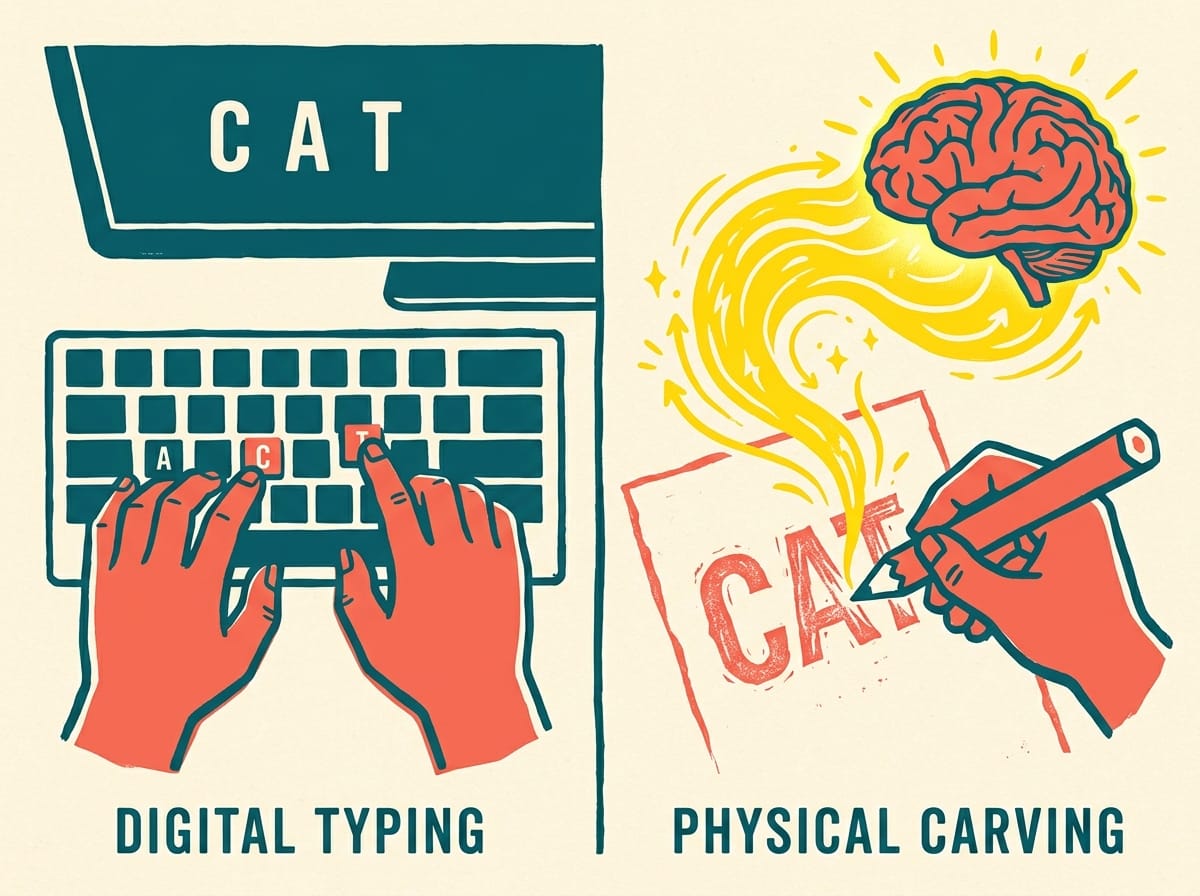
The original study did not test learning at all. The students copied words they already knew, with no requirement to remember anything afterwards. A difference in brain connectivity while someone writes a familiar word cannot tell you whether handwriting helps that person learn or remember. The study measured the activity, not the outcome.
Two further cautions sit alongside that one. The work was done on 36 adults in a laboratory, and moving from controlled lab measurements to claims about children in classrooms is a long step that researchers themselves disagree about.
The weight of the criticism is worth noting too. Marieke Longcamp is not a sceptic with a grudge against handwriting. She has spent two decades producing some of the best evidence that handwriting matters. When a researcher of her standing says a study has been oversold, the sensible response is to believe the narrower version of the story.
What is actually solid
Set the viral study aside and a sturdier body of work remains. It is less dramatic, and it is specifically about young children learning their letters.
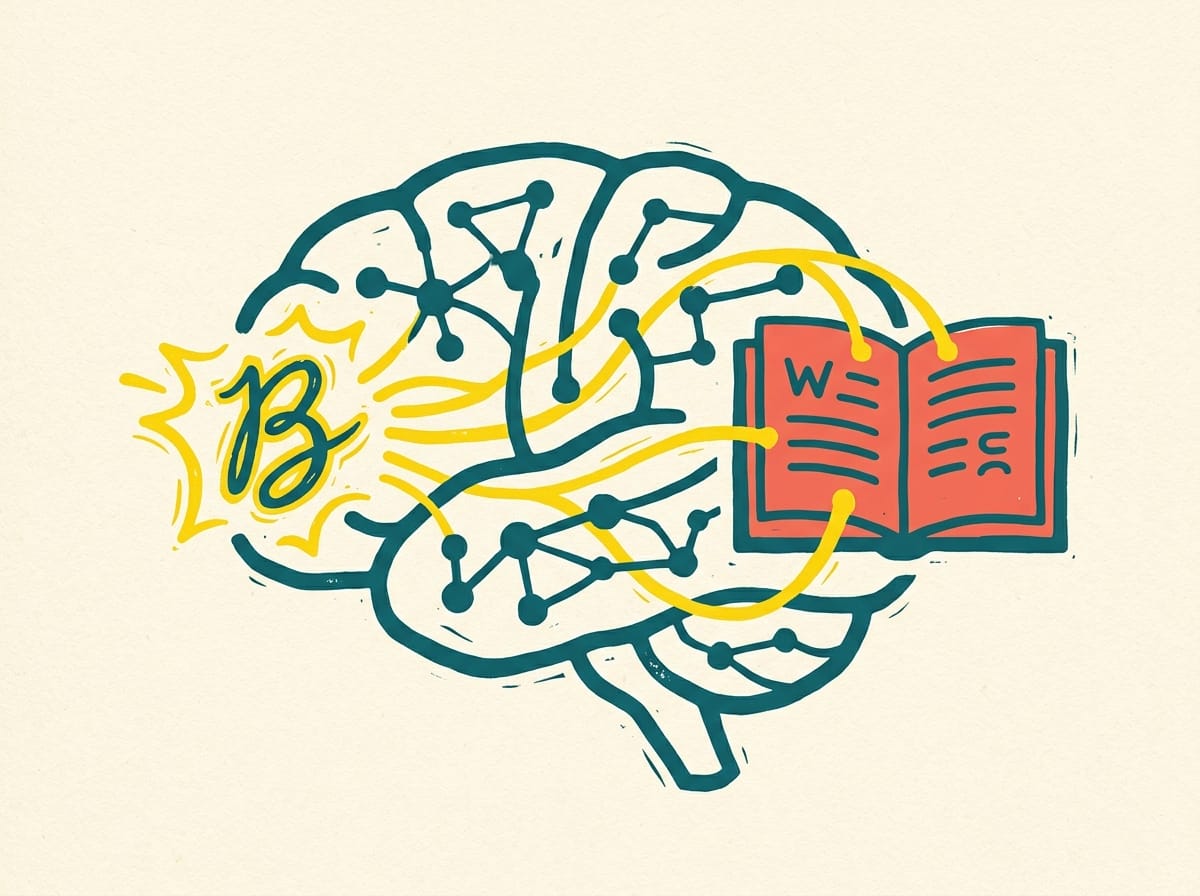
The strongest single piece comes from Indiana University. Karin James and Laura Engelhardt had pre-literate five-year-olds print, type or trace letters, then showed the children those letters while scanning their brains. A network of regions known to support reading became active during letter perception only in the children who had written the letters by hand.
Typing the letters did not do it, and neither did tracing them. Producing the letter themselves, with all its wobble and imperfection, was what engaged the reading network.
A behavioural study points the same way. Marieke Longcamp and colleagues trained 38 children aged three to five to copy letters, one group by hand and one by typing, then tested how well they could recognise those letters afterwards. The older children who had learned by hand recognised the letters better than those who had learned by keyboard.
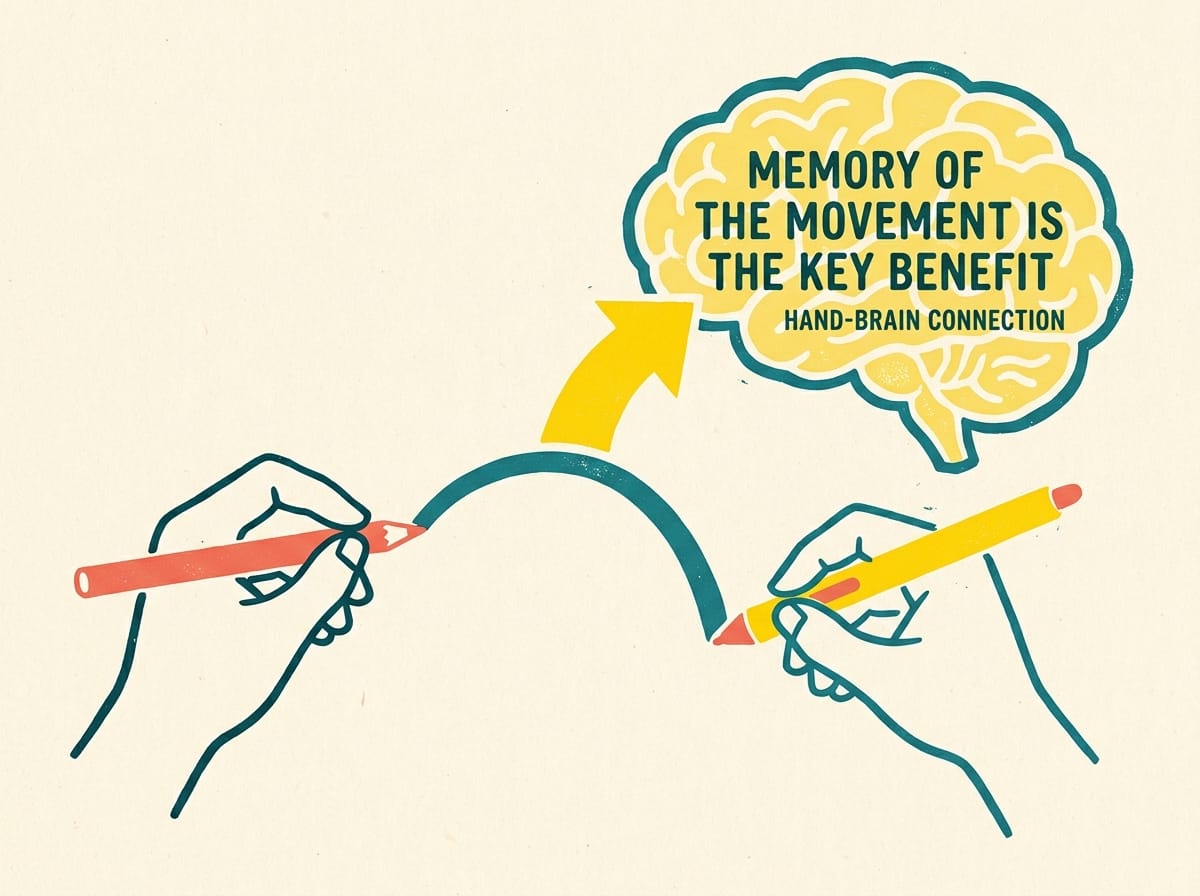
The likely reason is that forming a letter by hand ties its shape to the memory of the movement that made it, giving the child a richer and more durable sense of the letter than tapping a key provides.
This is the genuinely useful finding, and it is more modest than "handwriting builds the brain". In the years a child is learning the alphabet, writing letters by hand supports learning to read in a way that typing does not. The pencil struggle is doing something real.
It needs the usual caveats. These samples are small, the recognition advantage in the Longcamp study showed up in the older preschoolers rather than across the board, and a brain scan shows activation rather than a reading score years later. But the direction is consistent across behavioural and brain-imaging studies and has held up over time, which is more than can be said for the headline-grabbing connectivity result.
The note-taking claim that did not hold
The case for handwriting is often stretched well beyond young children to a second, famous claim: that older students who take notes by hand learn more than those who type. This one deserves a closer look, because the main study behind it did not hold up when it was tested again.
The source is a 2014 study by Pam Mueller and Daniel Oppenheimer with the memorable title "The Pen Is Mightier Than the Keyboard". Across three experiments, college students who took notes longhand did better on conceptual questions than those who typed.
The explanation offered was that laptop users tended to transcribe lectures word for word, while writing by hand forced students to condense and rephrase, and that processing is what aids learning. The study was cited everywhere, reached classroom policy and newspaper op-eds, and hardened into common sense.
Then other researchers tried to reproduce it. In 2019, Kayla Morehead, John Dunlosky and Katherine Rawson ran a careful preregistered replication and extension, adding groups who used eWriters and who took no notes at all. They reproduced the surface difference, in that laptop users did transcribe more verbatim, but not the headline.
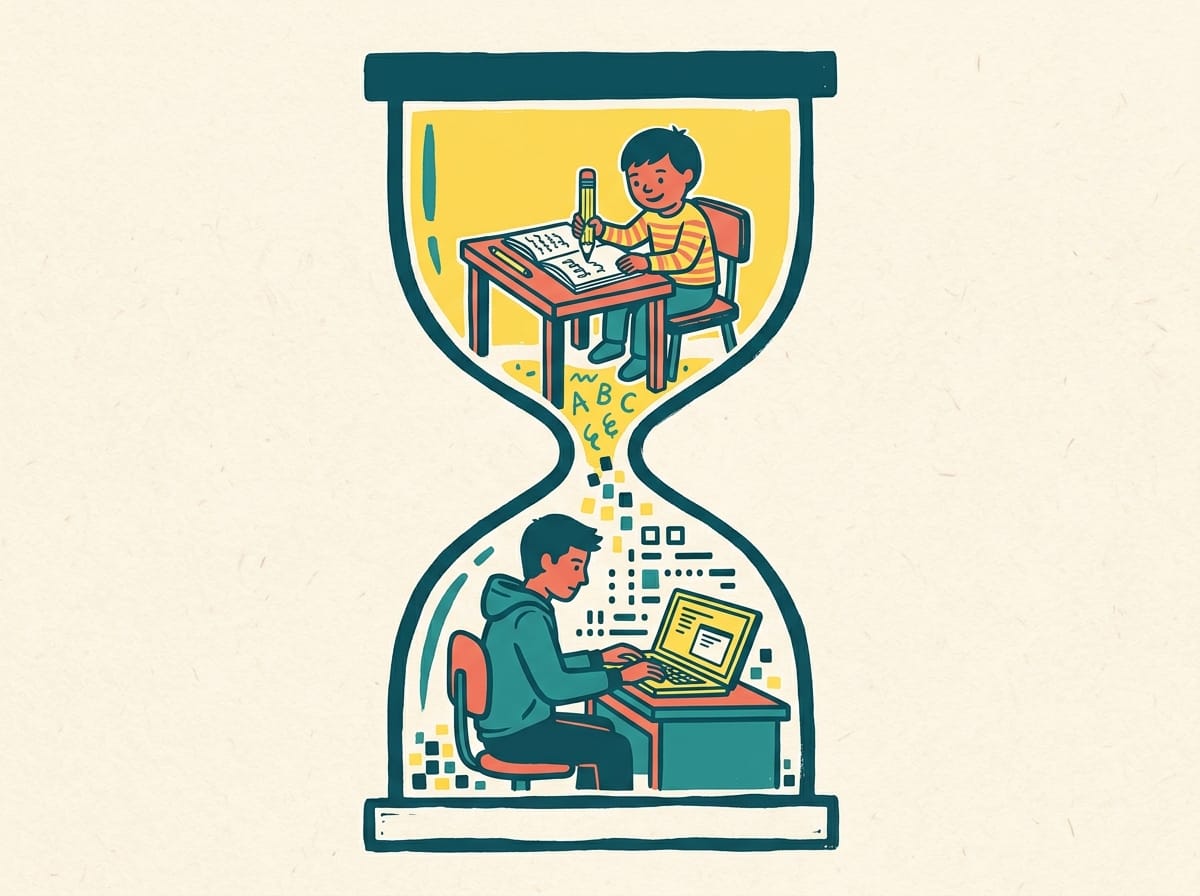
Longhand note-takers did not reliably outperform the others, and the group who took no notes performed no differently from those who did. The authors concluded that deciding which method is superior was premature. A later combined analysis found only a small effect favouring longhand, and not a reliable one.
So for older students choosing how to take notes, the advantage of pen over keyboard is weak and conditional. What seems to matter is not the tool but whether the student does something with the material.
A child who paraphrases and organises learns from it; a child who copies mechanically does not, and mechanical copying happens on paper as readily as on a screen.
What this means for your child
The reason the handwriting debate stays muddled is that people argue about it as a single yes-or-no question when the honest answer changes with the age of the child.
For the youngest, the ones still learning letters, handwriting earns its place. Forming letters by hand is part of how children come to recognise them and learn to read, and the evidence for that is solid and specific. If your four- or five-year-old is labouring over letter shapes, the effort is worthwhile, and not because handwriting improves the brain in some general way but because it is bound up with learning to read.
That same evidence should calm rather than alarm. The strong public claim, that screens are damaging the developing brain, is not what the viral study showed, and it is not a conclusion the careful research supports. A child who learns their letters by hand and later does much of their writing on a keyboard is not being harmed. They are doing what every literate generation does, which is to write with the tools of their time.
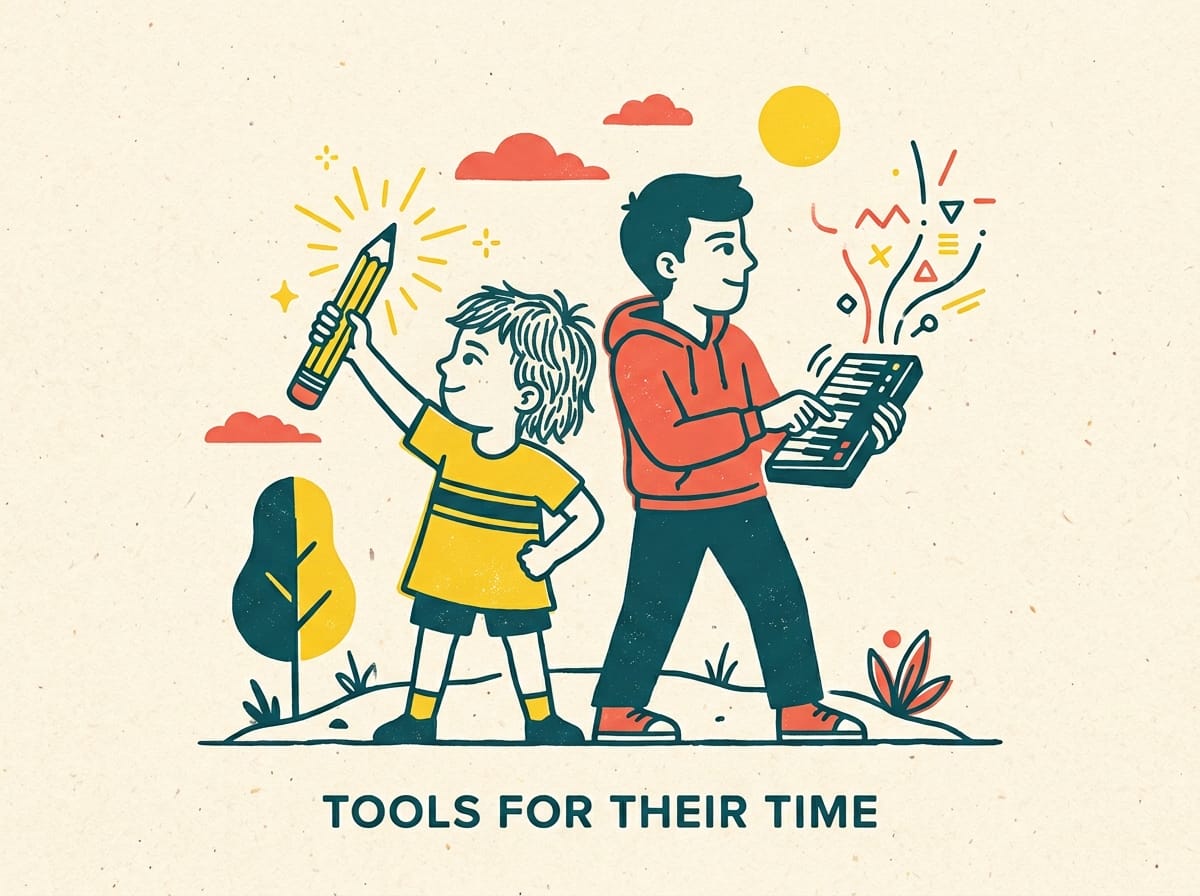
For older children, the medium matters far less than the thinking. Whether a teenager takes notes on paper or a laptop is a smaller question than whether they are paraphrasing and making sense of the material or simply copying it down. The useful thing a parent can encourage is not a particular implement but the habit of putting ideas into the child's own words.
So, should children still learn to write by hand? For the young, yes, and for a clear reason: it helps them learn to read. As they grow, that benefit fades, and what matters is no longer whether they write by hand or by keyboard but whether they think about what they are writing.
2024, Van der Weel and Van der Meer, Handwriting but not typewriting leads to widespread brain connectivity: a high-density EEG study with implications for the classroom, Frontiers in Psychology.
2025, Pinet and Longcamp, Commentary: Handwriting but not typewriting leads to widespread brain connectivity: a high-density EEG study with implications for the classroom, Frontiers in Psychology.
2012, James and Engelhardt, The effects of handwriting experience on functional brain development in pre-literate children, Trends in Neuroscience and Education.
2005, Longcamp, Zerbato-Poudou and Velay, The influence of writing practice on letter recognition in preschool children: a comparison between handwriting and typing, Acta Psychologica.
2014, Mueller and Oppenheimer, The Pen Is Mightier Than the Keyboard: advantages of longhand over laptop note taking, Psychological Science.
2019, Morehead, Dunlosky and Rawson, How much mightier is the pen than the keyboard for note-taking? A replication and extension of Mueller and Oppenheimer (2014), Educational Psychology Review.

Most parents think lifting weights is dangerous for children. Twenty years of paediatric consensus disagree, and the reason has more to do with the nervous system than with muscle.

Your child's fussiness for food is mostly inherited, and most of the things parents try in order to fix it make it worse. Find out why young children refuse food, why it is rarely a parent's fault, and the unglamorous method that genuinely changes how they eat.

Most of what shapes a young life turns out to be joyful and ordinary. A major new study shows what teenagers themselves treasure, and why the way they answer can tell you how they are really doing.

Chronic pain in children is more common than being left-handed. And adults are surprisingly bad at reading how much pain a child is in. This is what all parents should know.
