When should a child begin to train, and why the old fear was wrong
Most parents think lifting weights is dangerous for children. Twenty years of paediatric consensus disagree, and the reason has more to do with the nervous system than with muscle.
Most parents think lifting weights is dangerous for children. Twenty years of paediatric consensus disagree, and the reason has more to do with the nervous system than with muscle.

Parents are told that writing by hand is vital for their child's growing brain, and that screens are eroding it. We sort the viral headlines from the solid evidence, and find the real benefit belongs to one group above all: children still learning their letters.
Your child's fussiness for food is mostly inherited, and most of the things parents try in order to fix it make it worse. Find out why young children refuse food, why it is rarely a parent's fault, and the unglamorous method that genuinely changes how they eat.
Fish oil reducing aggression. Vitamins outperforming psychiatric medication. The clinical research on whether supplements can benefit children's brains is more rigorous, surprising and revealing than you may think.

What the clinical evidence actually shows - and what every parent needs to know before reaching for the medicine cabinet
Parents have always wanted to give their children every possible advantage. Increasingly, that means giving dietary supplements. Fish oil capsules, zinc tablets, magnesium gummies, broad-spectrum multivitamin formulas: the products promise improved focus, calmer behaviour, and sharper thinking. Most parents buying them do so on hope rather than hard evidence. But the hard evidence, it turns out, is more substantial than most people realise - and considerably more nuanced than the packaging suggests.
Every parent knows that food affects a child’s body. Fewer have stopped to consider that it is also, in a quite literal sense, building their child’s brain.
That’s because the human brain is roughly 60 per cent fat by dry weight, and a significant share of that fat consists of omega-3 fatty acids - the compounds found in oily fish like salmon, mackerel, and sardines.
These are not just nutrients that pass through; they are structural materials. Omega-3 fatty acids form the membranes around brain cells and govern how efficiently those cells communicate with each other. When a child’s diet is short of them, those membranes become less supple, and the chemical signalling systems in the brain that regulate behaviour, especially mood, attention, and impulse control, begin to function less well.
In short, a child’s capacity to concentrate, to manage frustration, to think before acting - all of it is partly a product of what they have been eating.
And for many children, that is a problem.
For example, most children in the UK are not getting nearly enough of these fats. Fish consumption has fallen sharply over the past few decades, and the processed food that increasingly fills the gap contains almost none.
Researchers have spent the last twenty years asking what happens when you correct that deficit — and the consistent answer, across dozens of clinical trials and tens of thousands of children, is that behaviour measurably improves.
“Six months after the fish oil stopped, the children who had taken it were still significantly less aggressive than at the start. The children who had taken the dummy drink had drifted back to where they began.”
And fish oil is only the beginning. Researchers are finding that broad-spectrum vitamin and mineral formulas can produce remarkable results in children with ADHD and severe mood difficulties - in some trials, outperforming psychiatric medication at the one-year mark.
A growing body of work is mapping exactly why: these formulas appear to reduce inflammation, reshape the gut bacteria that regulate the brain’s stress response, and protect developing brain cells from oxidative damage.
None of that is simple, and not all of it is without risk. Individual nutrients given to children who don’t need them can do harm. But the gap between what the clinical evidence shows and what most parents actually know is wide - and worth closing.
One of the earliest and most striking demonstrations of what fish oil can do came from a deceptively simple experiment. Researchers gave 200 children aged eight to sixteen a fruit drink every day for six months. Half the children were getting a daily dose of fish oil dissolved into the drink. The other half were getting the same drink, without it.
At the end of six months, both groups appeared to have improved - children across the board were fighting less and getting into less trouble. This is not unusual in research trials: when people know they are being watched and cared for, they often improve regardless of what they are actually receiving. The scientists noted this and kept watching.
Six months after the children stopped taking the drink - at the twelve-month mark overall - the two groups diverged sharply.
The children who had been getting the dummy drink had slipped back to exactly how they were behaving before the study started: the temporary improvement had not lasted. The children who had been getting the real fish oil had not slipped back. They were still significantly less aggressive and less likely to act out than they were at the very start, even though they had stopped taking the supplement half a year earlier.

This 2016 study, published in the Journal of Child Psychology and Psychiatry, was remarkable in another way too. It was not just the children who had changed.
The mothers and fathers of children in the fish oil group had also become significantly less aggressive and antisocial during the study period. When the researchers looked closely at why the children’s improvements had lasted so long, they found that part of the answer was this shift in parental behaviour - calmer parents, it turns out, tend to produce calmer children, and the supplement appeared to have set that virtuous cycle in motion. No fish oil label has ever mentioned this.
That trial was not a one-off.
A major review published last month, in 2026, in the Journal of Child Psychology and Psychiatry pooled 25 separate studies covering nearly 3,000 children, all testing whether omega-3 fatty acids reduce aggressive, impulsive, and antisocial behaviour.
To make sure the conclusion was not being skewed by any single team’s methods, the researchers ran the numbers two entirely different ways. Both analyses pointed to the same answer: fish oil consistently and significantly reduces these problem behaviours in children.
The finding held across different ages and genders, at different doses, and in both large and small studies. The children who benefited most were those not already on medication.
The effect was modest rather than dramatic - fish oil is not a transformation in a capsule - but it was unusually stable. When dozens of independent research teams across different countries keep arriving at the same result, scientists take that consistency seriously.

To understand why something as simple as diet can reach this far into a child’s behaviour, it helps to look at what happens when nutrition goes seriously wrong early in life.
A landmark 2006 study published in the American Journal of Psychiatry followed nearly 1,800 children on the island of Mauritius from birth, checking in on them repeatedly over fourteen years.
When the children were three years old, doctors examined them for physical signs that they hadn’t been getting the nutrition they needed: tell-tale cracking at the corners of the mouth, unusual reddening of the hair, thin or sparse patches where hair should be thick, and a low haemoglobin count indicating anaemia.
These are the visible signs of a body not getting enough vitamins, protein, iron, and zinc during its critical early development.
What happened to those children over the following decade and a half was stark.
Those who had shown signs of nutritional deficiency at age three were 41 per cent more likely to be aggressive at age eight, 10 per cent more likely to be aggressive and delinquent at age eleven, and 51 per cent more likely to be violent or conduct-disordered as seventeen-year-olds.
Crucially, these were not just children from harder backgrounds - the link held regardless of family circumstances, poverty levels, or other social factors. And it did not affect boys more than girls: the pattern was the same across both sexes.
The researchers also identified how the connection worked.

Children who had been malnourished at three tended to have lower IQs by age eleven. It was that cognitive gap - the quiet, invisible damage done to a developing brain - that then drove the higher rates of problem behaviour in adolescence. Poor nutrition in early childhood does not just affect a child’s body. It shapes the brain they will have, and with it their capacity to control impulses, manage frustration, and think through the consequences of their actions.
The same population in Mauritius also gave researchers the chance to test what could be done to change this trajectory.
An early enrichment programme for children aged three to five that combined extra cognitive stimulation, physical activity, and better nutrition - including an additional two and a half portions of fish per week - produced measurable improvements in brain activity by age eleven and a 34 per cent reduction in criminal behaviour by age twenty-three, compared to children who had not received the programme.
As a 2015 University of Pennsylvania summary of this work noted, the window in which nutritional support makes the biggest difference may be considerably earlier in a child’s life than most parents assume.
For parents of children who have been diagnosed with ADHD - or who suspect their child might have it - the research around supplements has been moving particularly quickly.
A 2025 clinical trial published in the journal Frontiers in Pediatrics looked at 220 children aged six to twelve, all with confirmed ADHD diagnoses, at a hospital in China.
One group of 111 children was given a broad multi-vitamin and mineral formula every day for three months. The formula contained zinc, magnesium, iron, and a range of B vitamins - all nutrients known to play a role in how the brain produces dopamine, the chemical that governs attention, motivation, and impulse control.
A second group of 109 children received exactly the same supplement, but also did daily aerobic exercise on top of it.
After three months, both groups had improved - but the group combining supplements with exercise had improved significantly more on every measure of thinking and attention that the researchers tested.

On a standard test of mental speed and focus, where children have to quickly identify words while ignoring distractions, the exercise-plus-supplement group completed the task nearly three seconds faster on average than the supplement-only group.
On a test of mental flexibility - the ability to switch between rules and adapt thinking - they also scored higher.
The proposed explanation is that aerobic exercise boosts blood flow to the brain and triggers the production of a key growth protein that helps brain cells form new connections, and this physical priming appears to make the nutrients more effective.
The takeaway for parents is significant: the supplements helped, but exercise made them work better.
A more cautionary picture emerged from a large 2025 trial in Tanzania, where researchers tracked 559 schoolchildren across four schools for two years, testing various combinations of physical activity and multi-vitamin supplementation.
On general tests of thinking speed and attention, the supplements alone produced no significant improvement.
But children receiving the supplements did score significantly higher on their end-of-year language exams, though not in maths.
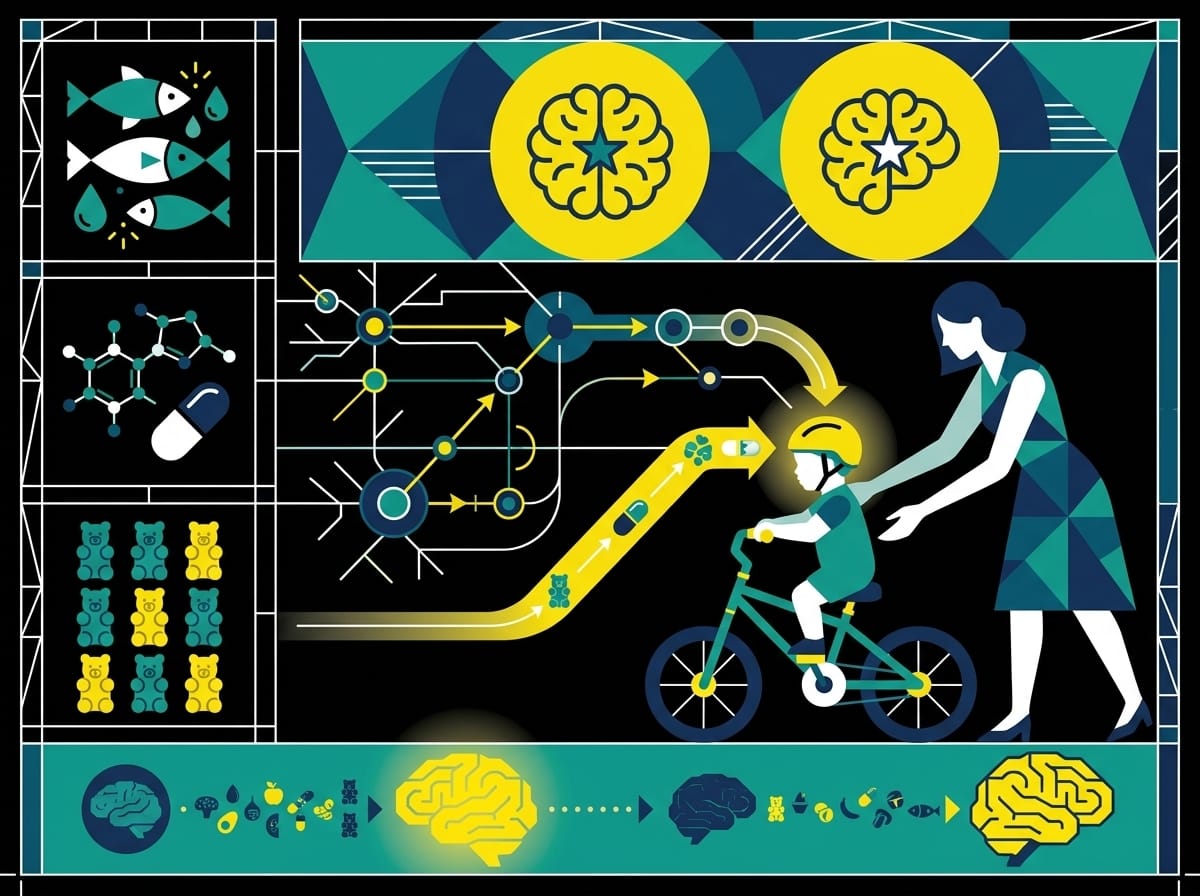
The picture that emerges is one of nuance: vitamins and minerals appear to help with specific kinds of learning - particularly language and the consolidation of new information - but broader cognitive gains, the kind that show up in attention tests and processing speed, seem to need physical activity to really kick in.
Take the exercise away, and you narrow what the supplements can do.
“Iron supplements can meaningfully help children with ADHD who have low iron stores. In children whose iron is already normal, the same supplement produces no benefit - and at high doses can cause harm. Without a blood test, you cannot tell which situation your child is in.”
There is also a critical warning buried in this research that every parent considering iron or zinc supplements should know about.
These single-nutrient supplements - just iron on its own, just zinc, just vitamin D - only appear to produce cognitive and behavioural benefits in children who are already deficient in that particular nutrient.
Take iron as an example: in children with ADHD who have been tested and found to have low iron stores, supplementing with iron can meaningfully reduce inattentive symptoms.
But in children whose iron levels are already normal, the same supplement produces no benefit at all - and at high doses, can actually be harmful.
The same pattern holds for zinc and vitamin D.
This matters enormously, because most parents giving their children supplements have never had their child tested. Without a blood test, you have no way of knowing whether your child is actually deficient in anything - or whether you are giving them something they already have enough of.
The most striking results in recent supplementation research are not about focus or aggression. They are about mood and emotional regulation - specifically, chronic irritability in children and teenagers.
In 2026, a research team led by Julia Rucklidge at the University of Canterbury, New Zealand, published results from a study called BEAM - Balancing Emotions of Adolescents with Micronutrients.
The study enrolled 132 teenagers aged twelve to seventeen who all had moderate to severe chronic irritability - not ordinary teenage grumpiness, but the kind of persistent, explosive, hard-to-manage emotional dysregulation that significantly disrupts family life and schooling.
Crucially, none of these young people were on any medication. Sixty-seven of them were given a broad-spectrum multi-vitamin and mineral formula for eight weeks. The other sixty-five were given a placebo - a tablet that looked identical but contained no active nutrients.

The overall results were positive: the teenagers taking the real formula showed significantly greater improvement in their emotional control than those taking the placebo.
But the findings became particularly striking when the researchers looked at a specific subgroup: the thirty teenagers in the trial who had a formal diagnosis of Disruptive Mood Dysregulation Disorder, or DMDD.
This is the clinical term for children whose irritability is not just difficult but genuinely severe - frequent, intense outbursts that are out of proportion to the situation and have been present for at least a year. It is a condition for which effective treatments are limited and parents are often desperate for options.
In this group, the results were exceptional.
Among the teenagers with DMDD who received the multi-nutrient formula, 64.3 per cent were rated by clinicians as having meaningfully improved by the end of the eight weeks.
Among those who received the placebo, only 12.5 per cent showed the same level of improvement.
To put that in terms researchers use to judge whether a treatment is practically useful: for roughly every two teenagers with DMDD treated with the formula, one showed a level of improvement they would not have shown on the dummy pill.
That is a degree of effectiveness that compares favourably with many licensed pharmaceutical treatments for childhood mood disorders.
The benefits extended beyond irritability too - parents reported improvements in conduct, and the teenagers themselves reported reductions in suicidal thoughts.

These findings echoed an earlier 2023 study called the MADDY trial - Micronutrients for ADHD in Youth - which followed 126 unmedicated children aged six to twelve who had ADHD combined with chronic irritability.
The children were spread across multiple research sites to make the results more reliable. Fifty-four per cent of those taking the multi-nutrient formula were rated by clinicians as having meaningfully improved after eight weeks, compared to 18 per cent of those taking a placebo.
That is a substantial gap - three times as many children responding to the real formula as to the dummy one.
What happened to those children over the longer term is, if anything, even more significant.
“At one year, 84 per cent of the children who had kept taking the multi-nutrient formula were still showing meaningful clinical improvement. Among those who had switched to psychiatric medication, the figure was 50 per cent.”
When the researchers kept following them, response rates continued to climb for those staying on the formula, reaching 66 per cent after sixteen weeks.
Children who had been on the placebo and then switched to the real formula at week eight caught up quickly, reaching 64 per cent response rates by week sixteen.
Then, a year later, with 93 of the original participants still in the study, the researchers compared three groups: those who had kept taking the multi-nutrient formula, those who had switched to conventional psychiatric medication, and those who had stopped all treatment.
Of the children who had continued with the formula, 84 per cent showed sustained clinical improvement. Of those on psychiatric medication, 50 per cent did. Of those who had stopped all treatment, 21 per cent still showed some improvement - but the gap between continuing the formula and stopping treatment altogether was enormous.
Numbers like these naturally raise a question: what is actually going on biologically when a child takes a broad multi-nutrient formula and their mood and behaviour improve?
Researchers have been probing this through follow-up studies on the children who took part in the MADDY trial, and the answers are genuinely interesting.
One study published in March 2026 analysed blood samples from 83 of the children, measuring 25 different markers of immune activity before and after eight weeks of supplementation. It found that the formula was significantly reducing a specific pattern of low-grade inflammation in the body.
Two particular immune signalling proteins - called interleukin-5 and interleukin-13 - fell noticeably in the children taking the formula while rising in those taking the placebo. A third protein, interleukin-15, which supports the health and development of certain immune cells in the brain, increased in children who responded well to the treatment and decreased in those who did not.

The picture that emerges is one of chronic, low-level inflammation - the kind that is increasingly linked to ADHD and emotional difficulties - being quietly resolved by the nutrients.
A second follow-up study took a different approach, looking at the gut bacteria of 44 children who had been part of the MADDY trial. The 2025 findings, published in the journal Gut Microbes, found that the multi-nutrient formula produced significant changes in the balance of bacteria living in the children’s digestive systems.
The children who responded best to the treatment showed particular increases in two families of gut bacteria that produce a substance called butyrate.
Butyrate is a short-chain fatty acid that protects the lining of the blood-brain barrier, dampens inflammation in the brain, and helps regulate the body’s stress response.
This gut-brain connection is a relatively new area of science, but the evidence from this study suggests that part of the reason multi-nutrient formulas affect mood is that they are reshaping the ecosystem of bacteria in a child’s gut in ways that directly influence how the brain functions.
A 2025 sub-study published in the Journal of Attention Disorders looked at a different mechanism altogether: oxidative stress.
This is the cellular equivalent of rust - the damage done to cells when unstable molecules called free radicals are produced faster than the body can neutralise them.
The developing brain is particularly vulnerable to this kind of damage because it is one of the most metabolically active organs in the body.
After eight weeks, the children taking the multi-nutrient formula showed significantly lower levels of these damaging molecules in their blood, while children on the placebo showed an increase.
Interestingly, the formula did not appear to be working by boosting the body’s existing antioxidant defences. Instead, it seemed to be reducing the initial production of the harmful molecules - dealing with the problem at source rather than mopping it up afterwards.

One more finding is worth understanding, partly because it contradicts what you might expect.
A 2024 study published in the British Journal of Nutrition looked at whether the improvements in children taking multi-nutrient formulas were simply explained by increases in specific minerals in the blood.
After supplementation, children did show higher blood levels of various minerals.
But when the researchers tested whether those higher mineral levels were actually what was causing the improvements in mood and behaviour, the answer was no.
The benefits could not be traced back to any single mineral rising to a higher level.
What appears to matter is not one nutrient going up, but the whole system of the body shifting - inflammation reducing, gut bacteria changing, cellular stress lowering - as a result of all the nutrients working together.
This is the question most parents will be asking by now, and the honest answer has two parts.
The first is that over-the-counter supplements are not the same as the research-grade formulas used in these clinical trials.
The formulas in the studies were carefully designed, tested for safety under close medical supervision, and in some cases contained higher doses of certain nutrients than would typically be recommended for unsupervised use.
If you simply buy a high-dose multivitamin off a shelf and give it to your child every day, you are not replicating what happened in these trials. Some of those nutrients can cause harm if given to a child who does not need them, or in unbalanced combinations.
The second part of the answer is more encouraging: the safety record of these specific formulas, when used properly, was good.
In the 2026 BEAM trial, the only side effect that occurred significantly more often in the supplement group than the placebo group was temporary, mild diarrhoea - affecting about one in five of those taking the real formula, compared to about one in sixteen on the dummy pill.
This was attributed to the magnesium content and settled on its own.
Fewer than one in ten teenagers had any trouble swallowing the capsules.

In the 2021 MADDY trial, rigorous safety checks including regular blood and urine tests found no serious adverse effects and no clinically meaningful changes in any health markers. Full detail on how the researchers ensured individual nutrients stayed within safe limits is set out in a
2024 published clinical commentary by the MADDY trial team.
For parents who want to act on this evidence in a practical way, the research points toward three specific tests worth asking a GP or paediatrician about.
The first is an Omega-3 Index, which measures the level of omega-3 fatty acids in your child’s red blood cells. Children whose levels are genuinely low tend to show the biggest response to fish oil supplementation; for children with attention difficulties, researchers recommend a daily dose of between 500 and 1,000 mg of an EPA-dominant fish oil formula.
The second is a serum ferritin test, which measures how much iron the body has in storage - not just whether the child is anaemic, but whether their iron reserves are adequate. This is the test that determines whether iron supplementation is likely to help or to be pointless, and the distinction matters enormously.
The third is a broader mineral screen covering zinc, magnesium, and vitamin D. These are the nutrients most often implicated in attention and mood difficulties, and supplementing any of them in a child who already has adequate levels is unlikely to help and may not be harmless.
There is one more dimension of this evidence that deserves attention, particularly for parents whose children are receiving or considering talking therapy or other psychological support.
A 2023 clinical trial published in the Journal of Child Psychology and Psychiatry took 290 children aged eleven and twelve with diagnosed conduct disorder or oppositional defiant disorder - conditions characterised by persistent defiance, aggression, and rule-breaking - and divided them into four groups over three months.
“The children who received both supplements and therapy improved more than those who received only one or the other. Better-nourished brains appear better able to engage with and benefit from the therapeutic work.”
One group received nutritional supplementation only: a daily omega-3 drink plus a combined vitamin and mineral supplement.
One group received only Cognitive Behavioural Therapy - a structured, evidence-based talking therapy - delivered in twelve weekly one-hour sessions at home, focused on anger management and recognising the consequences of actions.
One group received both. The fourth group received neither.
The group that received both supplements and therapy did better than either intervention on its own.
The researchers’ proposed explanation is intuitive once you think about it: the nutritional support appears to stabilise the parts of the brain responsible for self-control and emotional regulation.
A child whose brain chemistry is better supported is a child who is more able to actually engage with a therapy session - to think rather than just react, to absorb strategies rather than dismiss them.
The supplements, in this framing, are not a replacement for psychological support. They appear to make that support more likely to work.
The research described in this article is not the kind produced by supplement companies to sell products. It comes from peer-reviewed academic journals, clinical trials with control groups, and in several cases results replicated independently by different research teams in different countries. It is held to the same standard of evidence as pharmaceutical research.
That matters, because it means it is worth taking seriously - while also understanding what it does and does not say.
What it says is this: omega-3 fatty acids found in fish oil have the most consistent evidence base of any supplement for reducing aggressive and antisocial behaviour in children, with benefits that outlast the supplementation itself and that can extend to calmer behaviour in the adults living with those children.
Broad multi-nutrient formulas containing a wide range of vitamins and minerals have shown striking results for children and teenagers with severe emotional difficulties - particularly those with conditions like ADHD combined with persistent irritability or, especially, Disruptive Mood Dysregulation Disorder.
The biological explanations for why these formulas work are starting to be mapped: they appear to reduce inflammation, shift the balance of gut bacteria in directions that calm the brain’s stress response, and reduce cellular damage in brain tissue.
What the research does not say is that parents should start buying multivitamins in bulk and adding them to their child’s morning routine without any further thought.
Giving a child more of a nutrient they already have enough of is at best pointless and at worst harmful.

The clinical formulas used in these trials were closely monitored; the high-street equivalents are not equivalent. And throughout this body of research, physical exercise appears again and again as the ingredient that makes nutritional support work better - not an optional extra, but part of the picture.
The most useful single step a parent can take after reading this is to ask their GP for a blood test.
Specifically: an Omega-3 Index, a serum ferritin check, and a screen for zinc, magnesium, and vitamin D.
If those tests reveal genuine deficiencies, targeted supplementation - discussed with and monitored by a doctor - has a meaningful evidence base behind it.
If the tests reveal nothing, that is useful information too.
The science here is strong enough to act on. It is specific enough to require that you find out where your child actually starts before you begin.
2026, Rucklidge, J. et al. Efficacy and Safety of Micronutrient Treatment for Irritability in Adolescents: 8-Week Double-Blinded Randomized Placebo-Controlled Trial (BEAM). Journal of the American Academy of Child and Adolescent Psychiatry
2026, Raine, A. et al. Research Review: Omega-3 supplementation to reduce antisocial and externalizing behaviour problems in children. Journal of Child Psychology and Psychiatry
2025, Ye & Wang. Benefits of multi-micronutrient nutritional formula combined with aerobic exercise on children with ADHD. Frontiers in Pediatrics
2025, Minja et al. Effect of a School-Based Physical Activity and Multi-Micronutrient Supplementation Intervention on Cognitive Function and Academic Achievement Among Schoolchildren in Tanzania: Secondary Outcome from the KaziAfya Trial. International Journal of Environmental Research and Public Health
2025, Ast, H.K. et al. Gut microbiome changes with micronutrient supplementation in children with ADHD: the MADDY study. Gut Microbes
2025, Robinette, L.M. et al. Oxidative stress: secondary analysis of the MADDY trial. Journal of Attention Disorders
2024, Rucklidge, J. et al. Evaluating mineral biomarkers as mediators and moderators of behavioural improvements in a randomised controlled trial of multinutrients for children with ADHD. British Journal of Nutrition
2024, Johnstone, J.M. et al. Safety and dosing commentary: Dr. Johnstone et al. Reply. PMC / Journal of the American Academy of Child and Adolescent Psychiatry
2023, Raine, A. et al. Nutritional supplementation to reduce child aggression: a randomized, stratified, single-blind, factorial trial. Journal of Child Psychology and Psychiatry
2021, Johnstone, J.M. et al. Micronutrients for Attention-Deficit/Hyperactivity Disorder in Youths: A Placebo-Controlled Randomized Clinical Trial (MADDY). Journal of the American Academy of Child and Adolescent Psychiatry
2015, Raine, A. et al. Reduction in behavior problems with omega-3 supplementation in children aged 8-16 years. Journal of Child Psychology and Psychiatry
2015, University of Pennsylvania. Penn Research Points to Omega-3 as a Nutritional Intervention for Childhood Behavioral Problems. Penn Today
2004, Liu, J. et al. Malnutrition at age 3 years and externalizing behavior problems at ages 8, 11, and 17 years. American Journal of Psychiatry


Most parents think lifting weights is dangerous for children. Twenty years of paediatric consensus disagree, and the reason has more to do with the nervous system than with muscle.

Parents are told that writing by hand is vital for their child's growing brain, and that screens are eroding it. We sort the viral headlines from the solid evidence, and find the real benefit belongs to one group above all: children still learning their letters.

Your child's fussiness for food is mostly inherited, and most of the things parents try in order to fix it make it worse. Find out why young children refuse food, why it is rarely a parent's fault, and the unglamorous method that genuinely changes how they eat.

Most of what shapes a young life turns out to be joyful and ordinary. A major new study shows what teenagers themselves treasure, and why the way they answer can tell you how they are really doing.