When should a child begin to train, and why the old fear was wrong
Most parents think lifting weights is dangerous for children. Twenty years of paediatric consensus disagree, and the reason has more to do with the nervous system than with muscle.
Most parents think lifting weights is dangerous for children. Twenty years of paediatric consensus disagree, and the reason has more to do with the nervous system than with muscle.

Parents are told that writing by hand is vital for their child's growing brain, and that screens are eroding it. We sort the viral headlines from the solid evidence, and find the real benefit belongs to one group above all: children still learning their letters.
Your child's fussiness for food is mostly inherited, and most of the things parents try in order to fix it make it worse. Find out why young children refuse food, why it is rarely a parent's fault, and the unglamorous method that genuinely changes how they eat.
We redesigned playgrounds to protect children from accidents. But new data reveals we may have gone too far. Enforcing safe play actually damages mental health, increases anxiety and pushes bored kids toward much larger, hidden hazards

If you grew up in the 1970s or 1980s, your childhood playground probably had a tall metal slide, a heavy wooden seesaw, and hard concrete underneath. Injuries happened. Scraped knees and the occasional broken bone were simply part of a weekend afternoon.
Over the past three decades, city planners, schools, and parents have systematically redesigned those spaces. Driven by a genuine desire to prevent injuries - and a fear of lawsuits - we replaced concrete with soft rubber, lowered climbing frames, and swapped wooden structures for static plastic equipment. The thinking made sense: remove the danger, and children will be safer.
It is completely natural that we made these changes. Watching your child slip on a steep, rocky hill makes your stomach drop. But a growing body of paediatric research, including major studies published over the past three years, suggests this instinct, when applied to the design of public spaces, may be backfiring.
The research points to a hard truth: when we strip minor physical challenges out of play spaces, we may actually be harming children’s mental health. Children protected from every small fall show higher rates of anxiety. And, perhaps most counterintuitively, perfectly “safe” playgrounds often just push bored children towards far bigger, hidden dangers elsewhere.
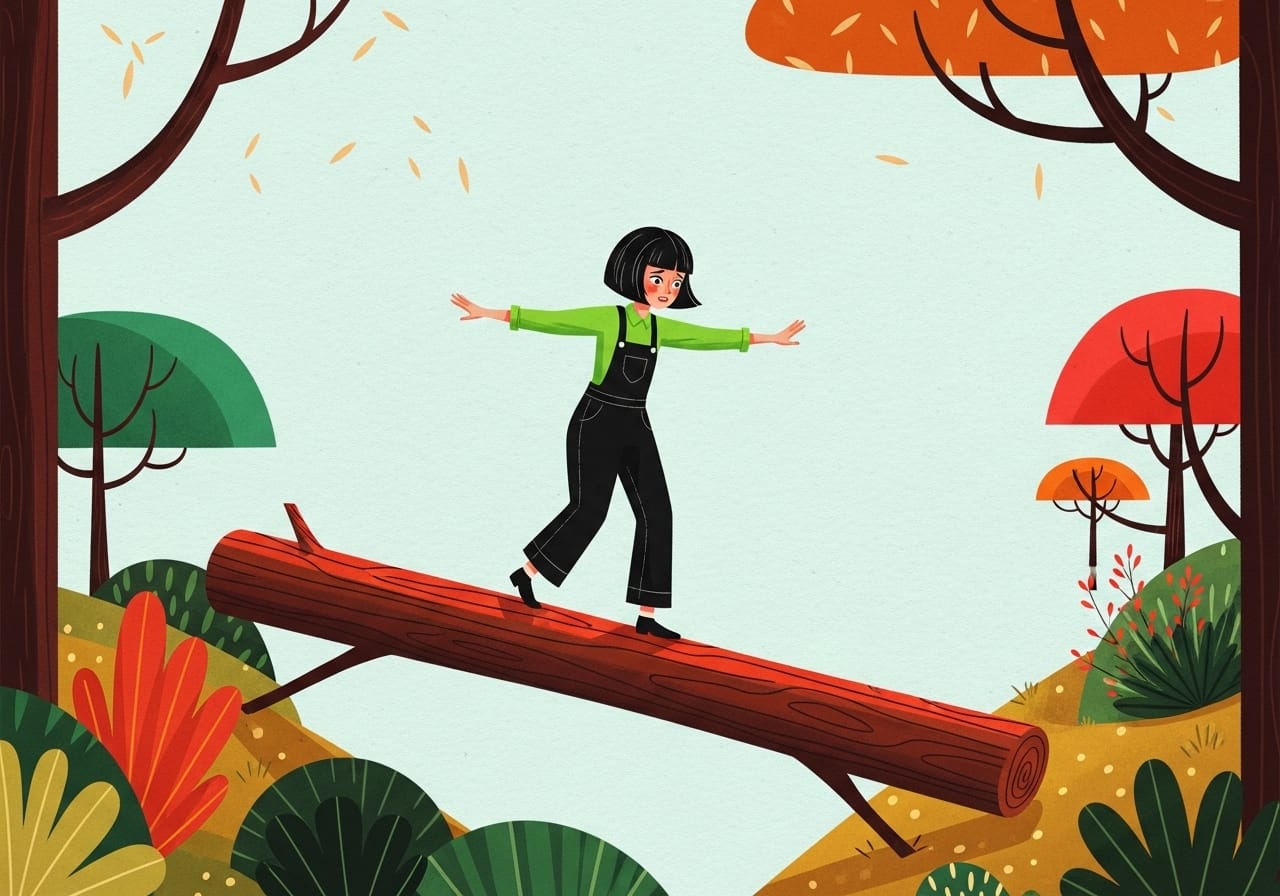
To understand where our playgrounds went wrong, it helps to know how researchers and clinicians actually define danger. When experts talk about “adventurous play,” they are not suggesting children run into traffic or climb 30-foot trees. They are drawing on a very specific medical distinction.
The current global benchmark for that distinction comes from Canada. In January 2024, the Canadian Paediatric Society published a comprehensive position statement combining years of global research into clear guidance. Its central message shifted the primary goal from keeping children “as safe as possible” to keeping them “as safe as necessary.”
The statement draws a clear line between two different kinds of danger. The first is a manageable risk: a physical challenge where a child might get a bruise or a minor scrape, but the danger is visible and within the child’s ability to assess. Think of a child balancing on a low log, or running down an uneven grassy hill. The second is a hazard: a danger the child cannot possibly understand or calculate. A high fall that could cause serious head trauma is a hazard. So is a poorly anchored piece of equipment, hidden broken glass, or a busy road.
The guidance to parents, teachers, and city planners is clear: identify and eliminate the hazards, but deliberately leave the minor risks in place. Taking away every small challenge denies a child’s brain the practice it needs to learn its own physical limits and manage feelings of fear and uncertainty.
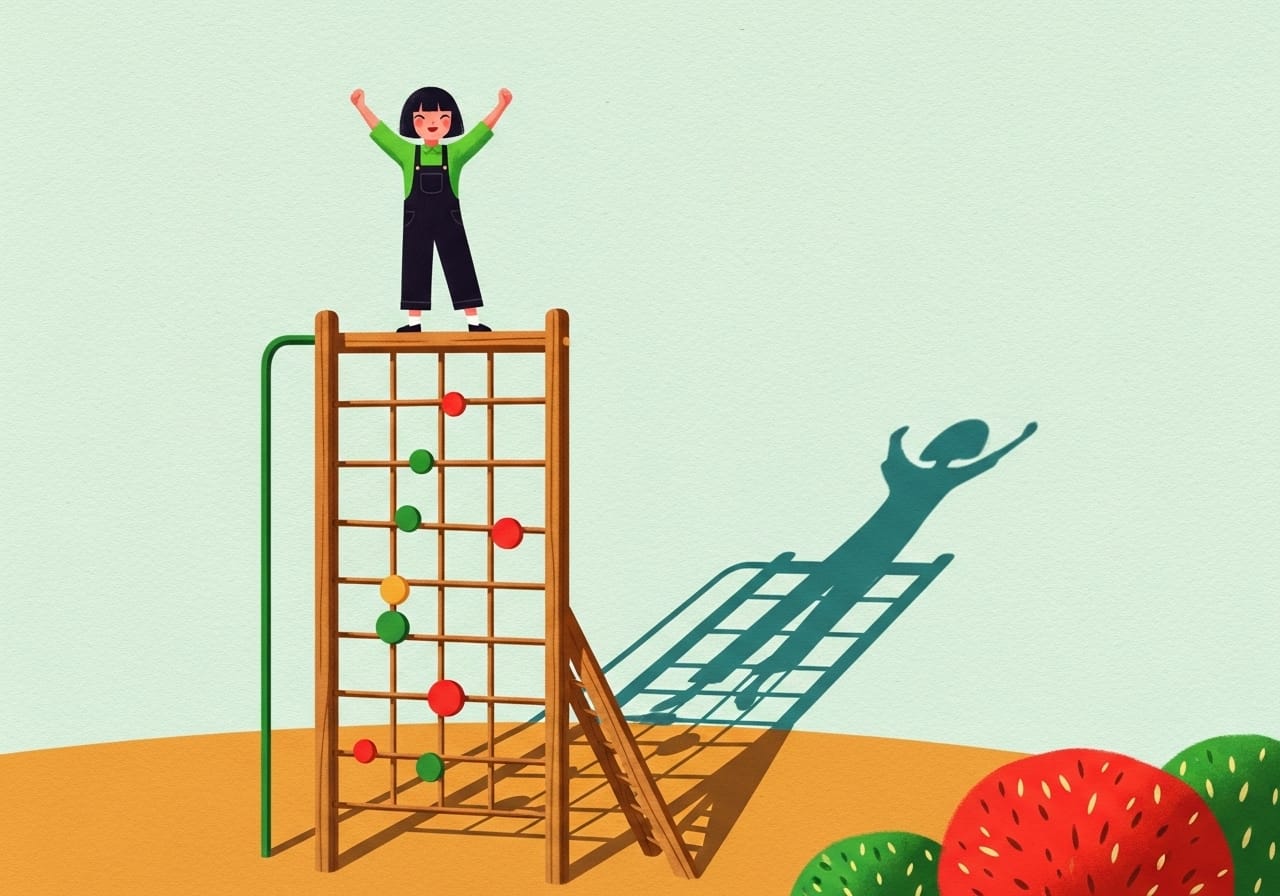
This distinction matters enormously, because leaving those minor risks in place turns out to have a measurable effect on children’s mental health.
Rates of childhood anxiety and depression have risen sharply in recent years. Research increasingly points to an inverse relationship: the more regularly a young child is exposed to manageable physical challenges, the less likely they are to develop anxiety disorders later on.
Professor Helen Dodd and Dr Kathryn Hesketh, working at the University of Exeter and the MRC Epidemiology Unit at Cambridge respectively, have provided some of the most robust data on this. In 2024 they published findings from the British Preschool Children’s Play Survey, which gathered data from a nationally representative sample of 1,166 parents of two to four year olds in Britain. The survey measured how much time children spent playing adventurously - in ways that were thrilling and involved uncertainty - and tracked associations with their mental health.
The results were striking. Each additional hour per week a child spent playing adventurously was associated with lower anxiety-related scores and higher levels of positive affect. Children who regularly played in ways involving uncertainty and physical challenge showed meaningfully better mental health outcomes than those who did not.
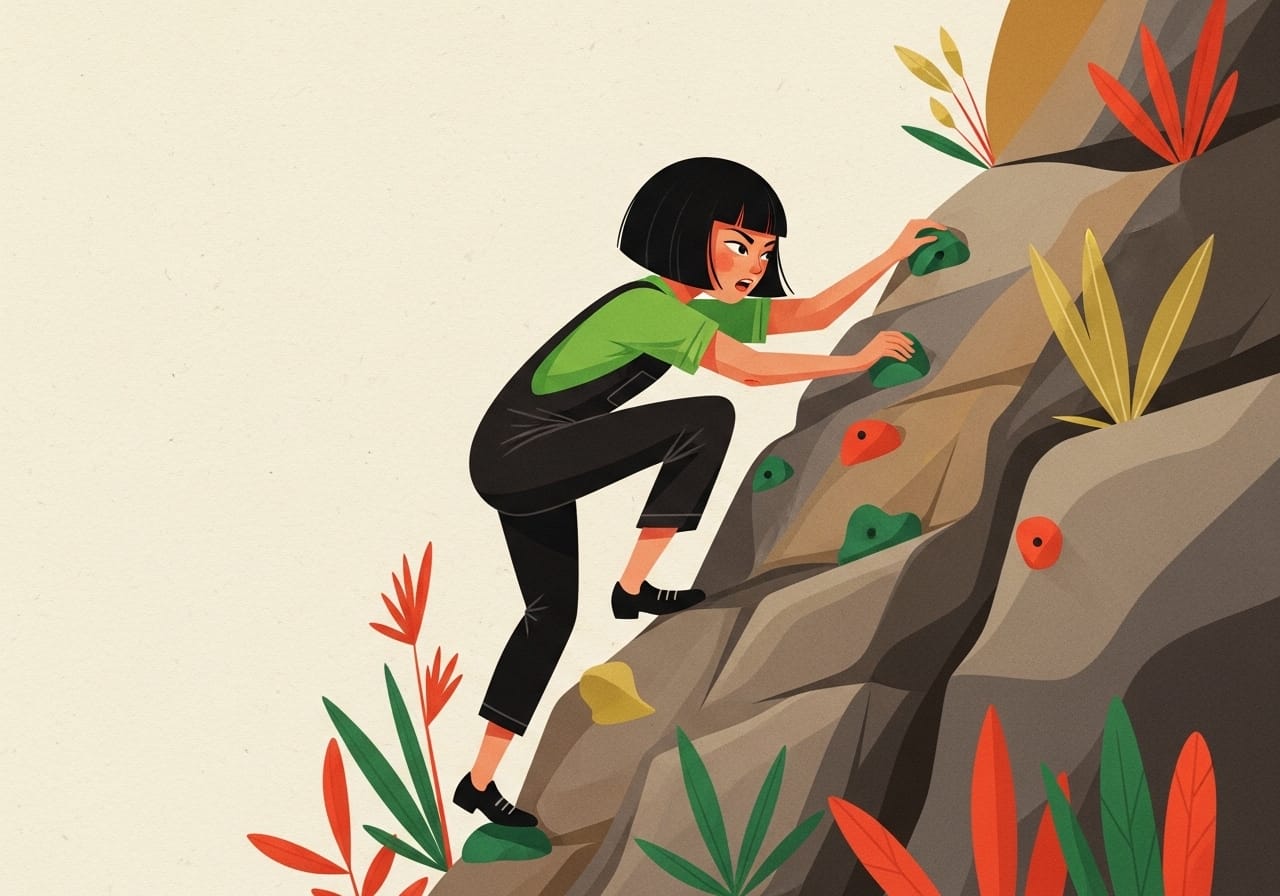
The reason for this is fairly straightforward. Adventurous play is, in effect, a natural rehearsal for facing fear. When a child jumps from a low wall or climbs over a large rock, their body reacts in much the same way it would under genuine threat - heart rate rises, adrenaline is released. But because this happens during play, and the child is in control, they learn to tolerate those physical sensations. When they pull it off, their brain releases dopamine and the stress response shuts down. Over time, the brain learns that a racing heart does not signal catastrophe.
Children raised in overly sanitised environments miss out on this daily practice. Without it, their threat-detection systems can become hypersensitive, making ordinary challenges feel overwhelming.
The Dodd and Hesketh research also uncovered a concerning gender gap. Young girls tend to be less physically adventurous in how they play than boys, and this pattern was visible even in two year olds - earlier than the researchers expected. The study did not directly explore the reasons, but other research suggests it is heavily shaped by adults steering girls away from rough or physical play. Because girls are systematically getting less exposure to these challenges, they are missing out on the same resilience-building process - something that may contribute to the higher baseline rates of anxiety seen in females later in life.
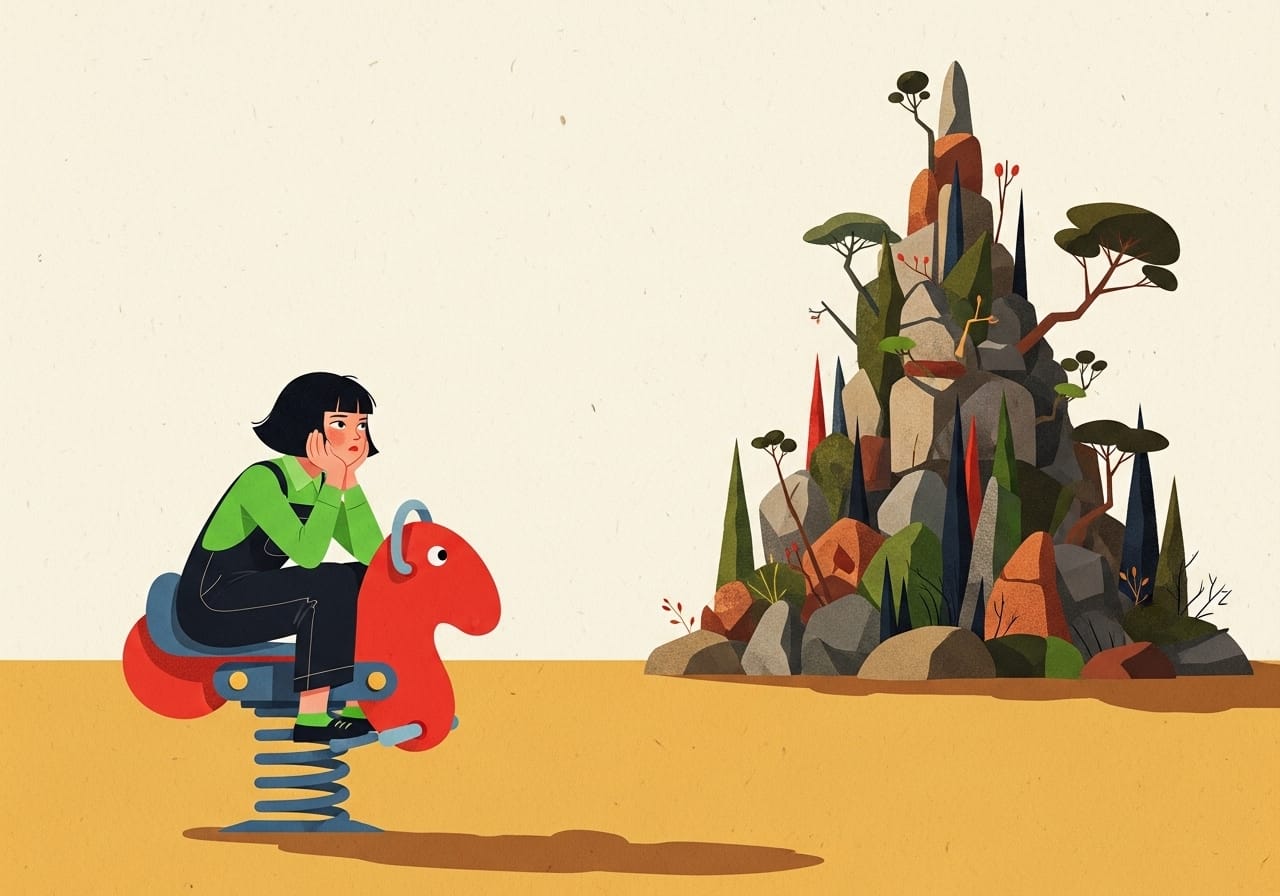
Even if parents accept that over-sanitised play spaces may affect mental health, many will ask: at least they prevent physical injuries, surely?
The hospital data suggests otherwise. Researchers have found that making play spaces perfectly safe can actually drive children towards more dangerous behaviours elsewhere. This is sometimes called the “Safety Paradox.”
Children have a biological drive to test their physical limits and experience a sense of thrill. It is not a habit that can simply be engineered out of them. When a park offers only low rubber mounds and predictable plastic equipment, older children find it boring. And when children are bored and under-challenged, they do not stop seeking risk - they go and find it somewhere else.
A 2026 study by Armstrong, Barrett, D’Arcy and Gaul, published in the journal Archives of Disease in Childhood, examined outdoor play-related injuries presenting to a large regional paediatric emergency department over a two-year period.
It found that injuries from traditional playground equipment tended to be relatively mild, while the more serious injuries came from contexts where children encountered dangers they could not assess - wheeled equipment used in busy roads, or backyard trampolines with multiple children jumping at once. The latter creates physical forces that a young child simply cannot predict.
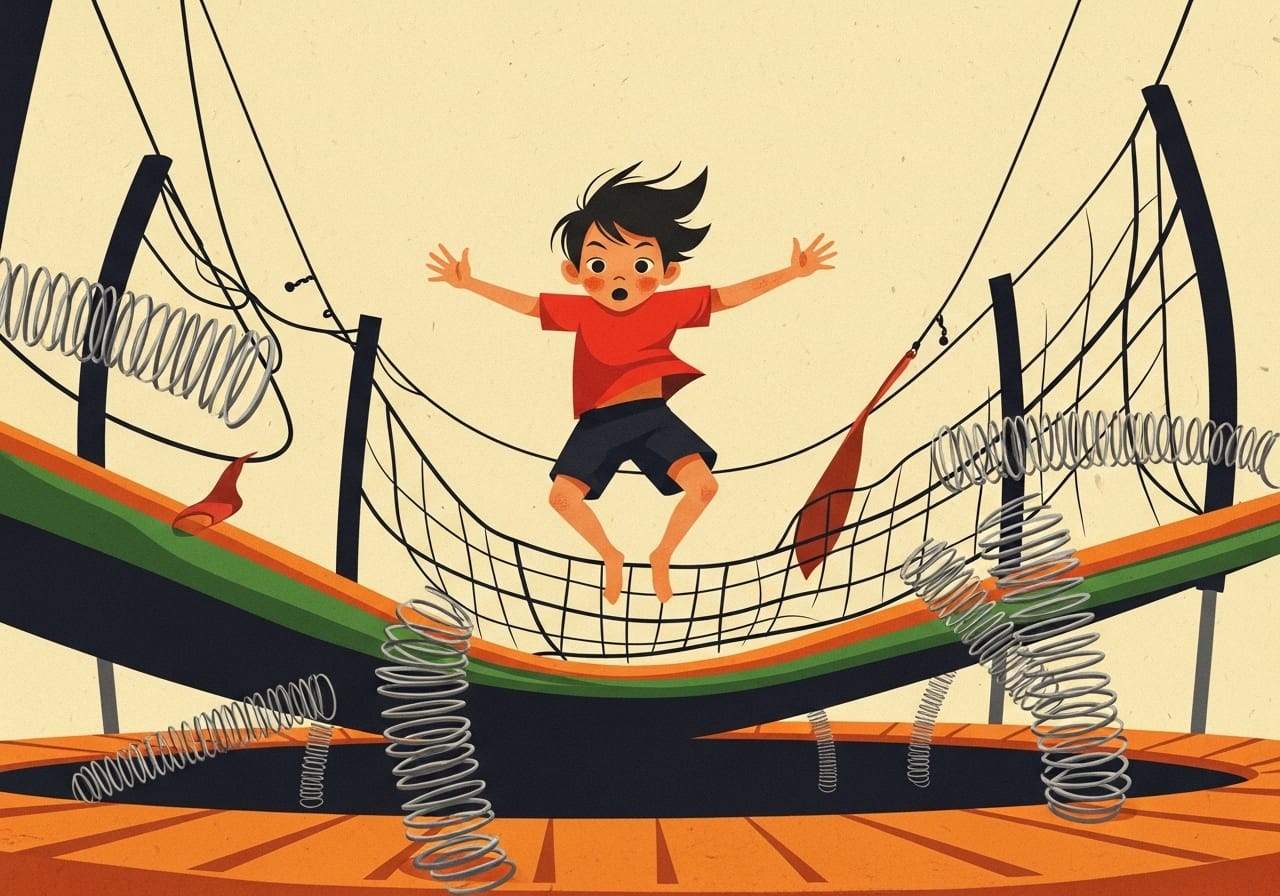
Children will also try to make safe equipment dangerous just to get the thrill they are missing. They climb onto the slippery roofs of slide enclosures or jump from moving swings. By engineering playgrounds to prevent minor falls, we can inadvertently push children into unmanaged streets and back gardens, turning low-level developmental risks into genuinely life-threatening ones.
Recognising these twin problems - rising anxiety and the displacement of physical risk to more dangerous settings - an international group of over 130 researchers and urban planners released a joint position statement in 2025. Coordinated by Outdoor Play Canada and PLaTO-Net, but drawing on global evidence, the statement is the most comprehensive international benchmark on active outdoor play to date. It calls clearly for children to have regular access to minor physical risks, rough-and-tumble play, and unpredictable outdoor environments as essential components of healthy development.
We are already seeing this shift in practice. In Britain, adventure playgrounds have operated for decades. Places like The Vench in Lockleaze, Bristol - which has been running for over 50 years - offer children zip wires, rope balances, large wooden structures, and open space to explore, all supervised by trained playworkers who watch for genuine hazards without stepping in to manage every scrape.
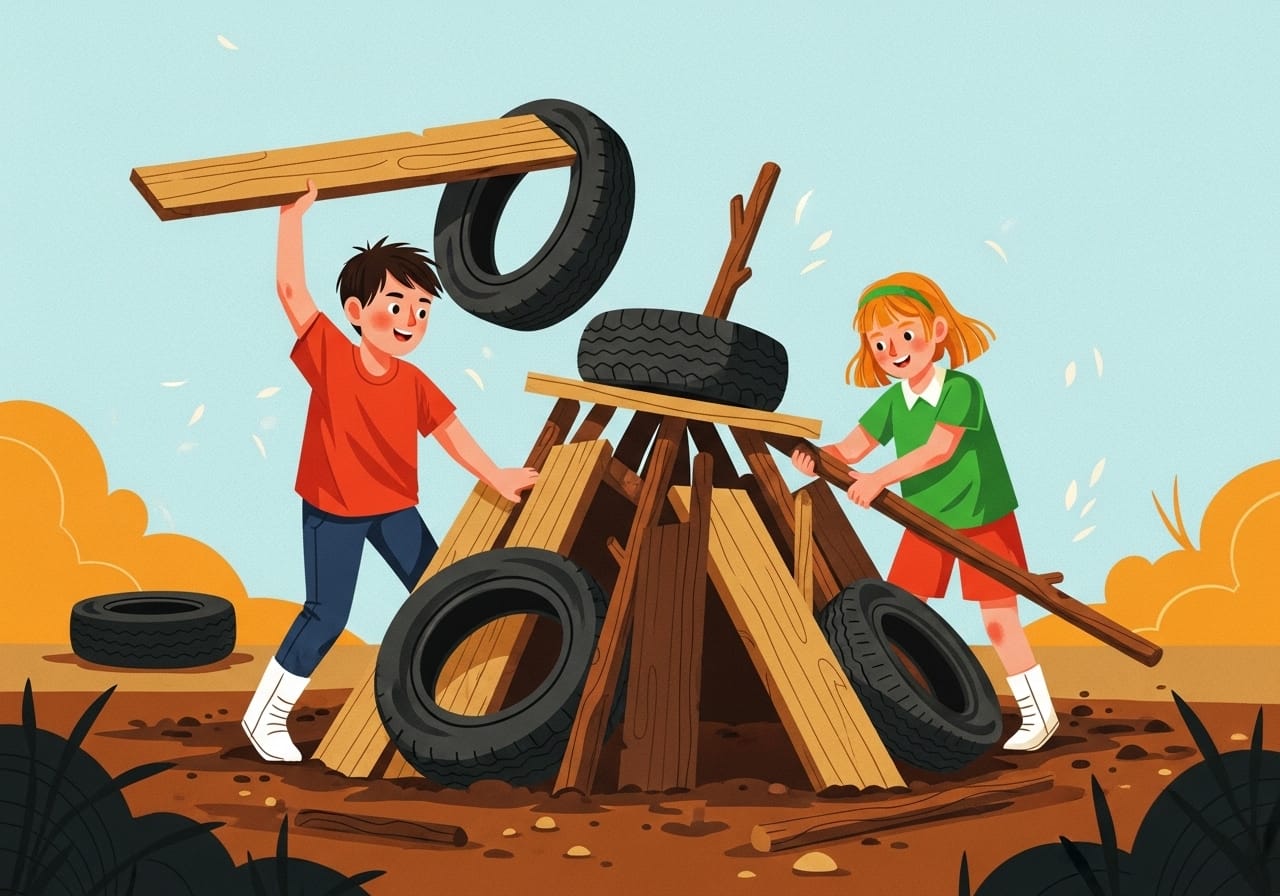
What the research consistently finds at these kinds of spaces is that accident rates are no worse than at conventional playgrounds - and in many cases they are better. The explanation sits in the biology: when children play in a dynamic, unpredictable environment, they pay more attention. They actively read the ground, adjust their movements, and stay physically alert. That heightened awareness reduces the kind of clumsy, inattentive accidents that happen when children zone out on predictable equipment.
In the United States, New York City’s The Yard on Governors Island is the most prominent example of this model in action. It is a 50,000-square-foot space stocked with loose materials, hand tools, wood, tyres, and paint - everything built and altered by the children themselves. Trained playworkers are present throughout, but their role is specifically to scan for genuine hazards, not to direct the play. Adults are not permitted into the main area of The Yard at all - by design, so that children can make their own physical calculations without adult anxiety filtering into the equation.
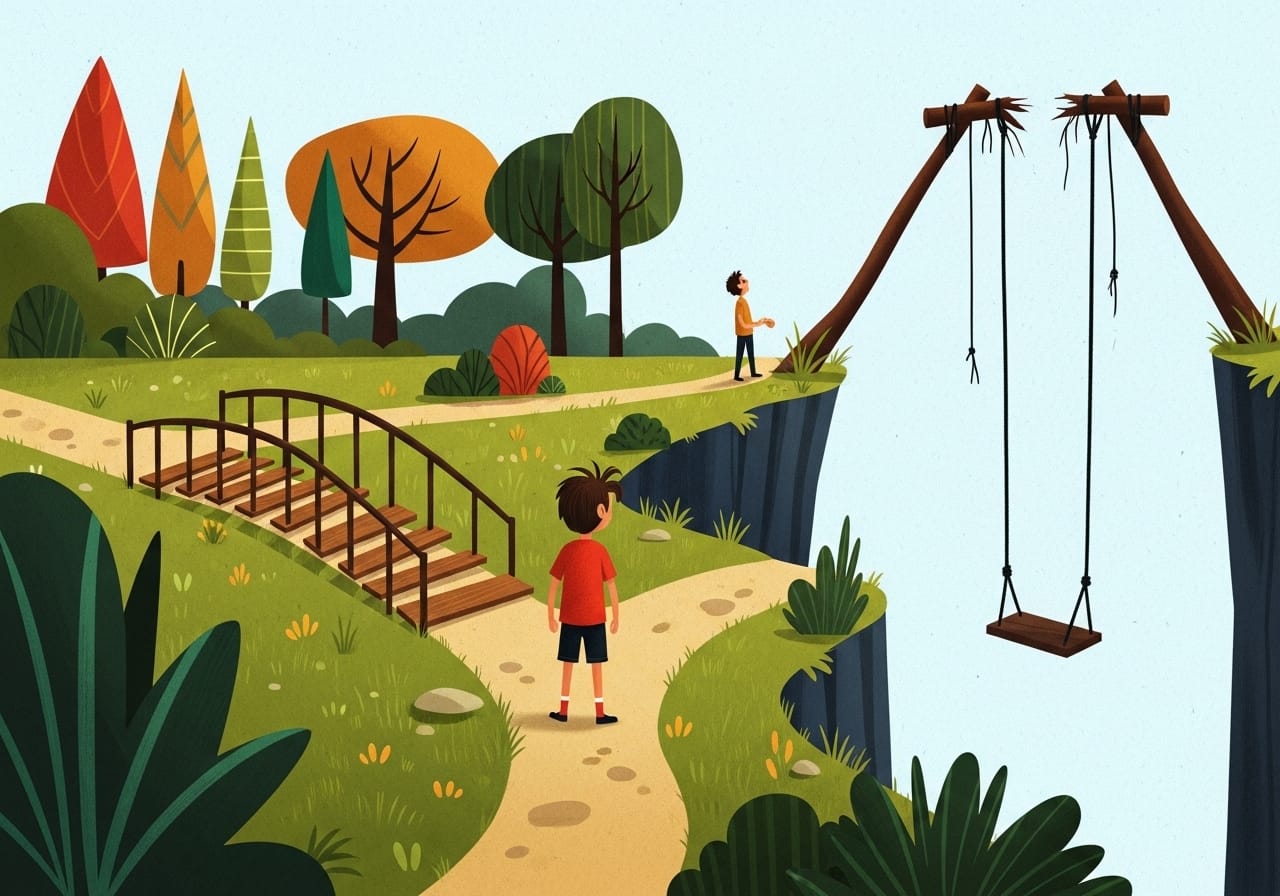
Applying this research in practice requires a real shift in how we think about what a safe outdoor environment actually looks like.
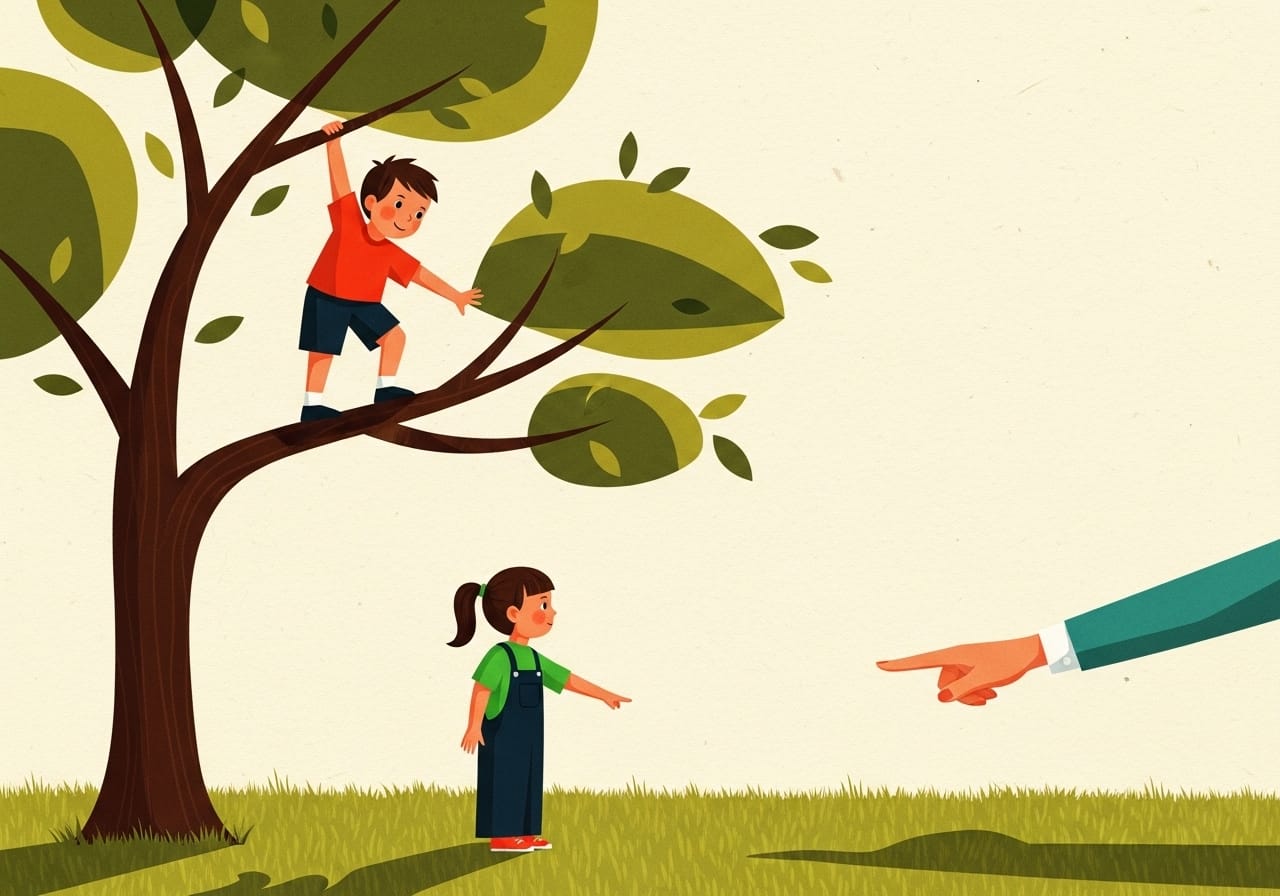
When you take your child to a park or an open space, your first job is to scan for genuine hazards: deep fast-moving water, high-speed traffic, toxic materials, badly broken structures, or heights that could cause serious injury. If those hazards are absent, your second job is to step back.
If your child is working out how to balance on a wet log, scrambling over a large rock, or running down a steep hill, they are actively building the neurological pathways that will help them manage fear and uncertainty for the rest of their lives. Stepping in to stop them before they fall might prevent a bruised knee today, but it also interrupts a biological process they need.
None of this means ignoring real dangers. The distinction between a scraped knee and a genuine hazard is real and important. But the research is now clear enough that we can say, with reasonable confidence, that the safest thing we can do for our children is not to remove every physical challenge from their world - it is to let them navigate those challenges themselves.
2026, Hesketh, K.R. & Dodd, H.F., Play and screentime are associated with preschoolers’ mental health: Cross-sectional findings from the British Preschool Children’s Play Survey. BMJ Open
2026, Armstrong, F., Barrett, M., D’Arcy, L. & Gaul, D., Outdoor play and risk in kids: a cross-sectional study. Archives of Disease in Childhood
2025, Outdoor Play Canada & PLaTO-Net, Position statement on active outdoor play. International Journal of Behavioral Nutrition and Physical Activity.
2024, Beaulieu, É. & Beno, S., Healthy childhood development through outdoor risky play: Navigating the balance with injury prevention. Paediatrics & Child Health. Canadian Paediatric Society.
2024, Dodd, H.F. & Hesketh, K.R., The British Preschool Children’s Play Survey: When, where, and how adventurously do British preschool-aged children play? Journal of Physical Activity and Health

Most parents think lifting weights is dangerous for children. Twenty years of paediatric consensus disagree, and the reason has more to do with the nervous system than with muscle.

Parents are told that writing by hand is vital for their child's growing brain, and that screens are eroding it. We sort the viral headlines from the solid evidence, and find the real benefit belongs to one group above all: children still learning their letters.

Your child's fussiness for food is mostly inherited, and most of the things parents try in order to fix it make it worse. Find out why young children refuse food, why it is rarely a parent's fault, and the unglamorous method that genuinely changes how they eat.

Most of what shapes a young life turns out to be joyful and ordinary. A major new study shows what teenagers themselves treasure, and why the way they answer can tell you how they are really doing.