When should a child begin to train, and why the old fear was wrong
Most parents think lifting weights is dangerous for children. Twenty years of paediatric consensus disagree, and the reason has more to do with the nervous system than with muscle.
Most parents think lifting weights is dangerous for children. Twenty years of paediatric consensus disagree, and the reason has more to do with the nervous system than with muscle.

Parents are told that writing by hand is vital for their child's growing brain, and that screens are eroding it. We sort the viral headlines from the solid evidence, and find the real benefit belongs to one group above all: children still learning their letters.
Your child's fussiness for food is mostly inherited, and most of the things parents try in order to fix it make it worse. Find out why young children refuse food, why it is rarely a parent's fault, and the unglamorous method that genuinely changes how they eat.
Modern parenting pressure to stay 'perfectly calm' can lead to a measurable state of burnout. We examine the latest research explaining why hiding your feelings backfires, and how 'sturdy leadership' offers a clearer path to well-being.

It starts with a standoff.
For some of us, it is a toddler screaming because you gave them the blue cup instead of the red one. For others, it is a fourteen-year-old rolling their eyes at a curfew you are too exhausted to enforce. They know they can out-negotiate you.
You validate their feelings. You get down on their level or sit on the edge of their bed. You explain. You empathize. You offer choices. They scream louder or argue harder. You take a deep breath, suppress your rising panic, and begin the negotiation.
For the better part of a decade, the "Gentle Parenting" movement promised us a revolution. It suggested that if we were empathetic enough, patient enough, and validated every single feeling, we could raise a generation free from the scars of the past. It was a beautiful promise.
But as we begin 2026, the data is telling a different, harder story. If you have spent years negotiating with a three-year-old or trying to be your teenager’s "safe space" at the expense of your own authority, you are likely experiencing a specific, measurable form of exhaustion.
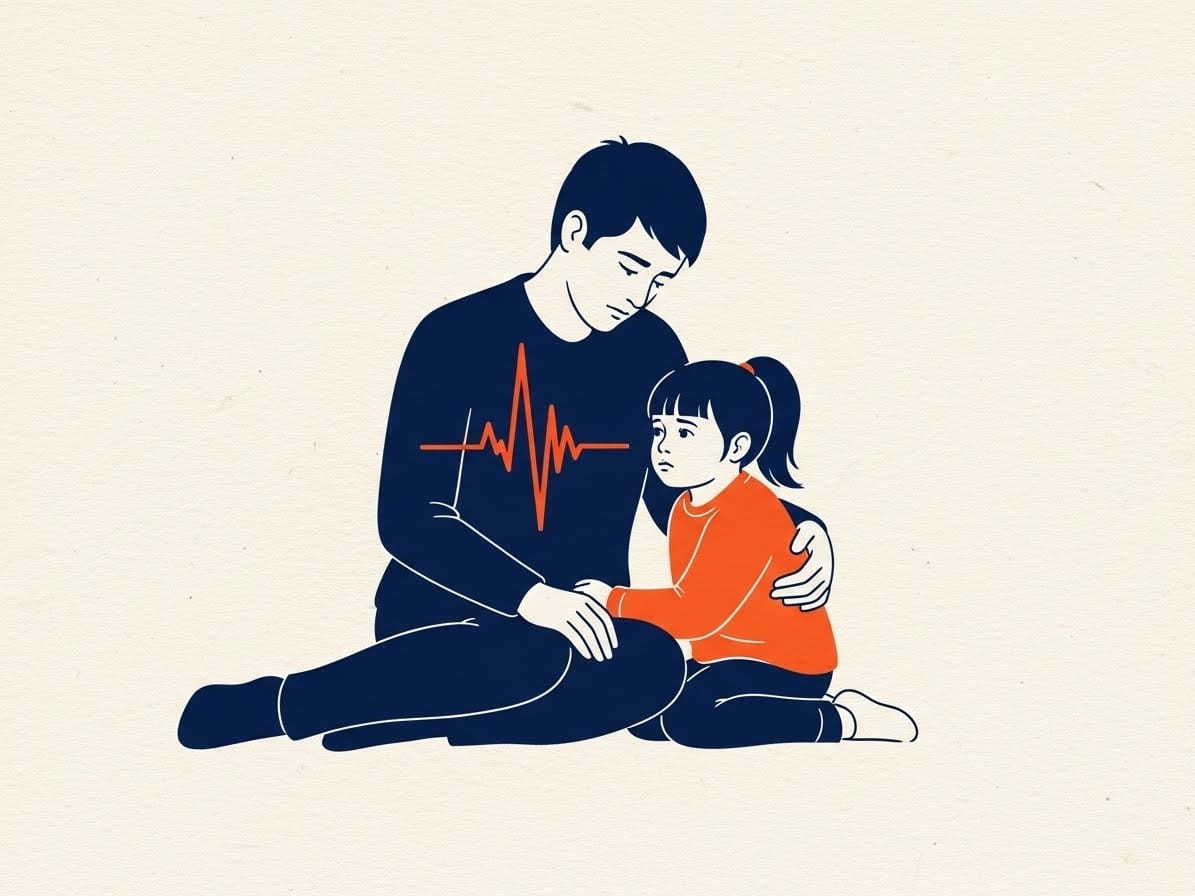
This isn’t just tiredness. It is the cost of a failed experiment in emotional suppression. To keep our sanity, and to actually help our children, we need to move past the idea that being "gentle" means being endless.
The "Perfectly Calm" Trap
We often assume that the goal of modern parenting is to never lose our cool. But trying to be the "perfectly regulated" parent, the one who never raises their voice, is biologically dishonest.
In late 2024, a landmark study in PLOS ONE was the first to empirically scrutinize this "Gentle Parenting" model. The researchers, led by Dr. Anne Pezalla at Macalester College, found that for many parents, the pressure to maintain a facade of constant calm drove feelings of "uncertainty and burnout" in over one-third of the group.
The study revealed a troubling paradox. Parents who were most committed to being "gentle" often reported lower feelings of self-efficacy. They were trying so hard to be perfect that they felt like failures.
Worse, the biology suggests this suppression backfires. A 2025 study in Communications Psychology found that when parents suppress their genuine emotions to perform a script, it creates a physiological "mismatch." Children are wired to detect this. They sense the difference between the calm voice and the spiking heart rate. This makes them feel less safe, not more.
Join us to read how "gentleness" slips into permissiveness, why teenagers specifically crave stronger boundaries, and the practical "Sturdy Leader" scripts you can use for children of every age.
The Permissiveness Slide
The most critical finding from the last 18 months of research is that many of us think we are being "gentle" when we are actually being permissive.
A major 2025 analysis in Frontiers in Pediatrics identified a dangerous link between parental burnout and permissive parenting. The researchers found a "congruence effect" where rising burnout causes parents to lose the energy to enforce boundaries. They slip into permissiveness.
Crucially, this study found that this combination, burnout plus permissiveness, was a significant predictor of social anxiety in children.
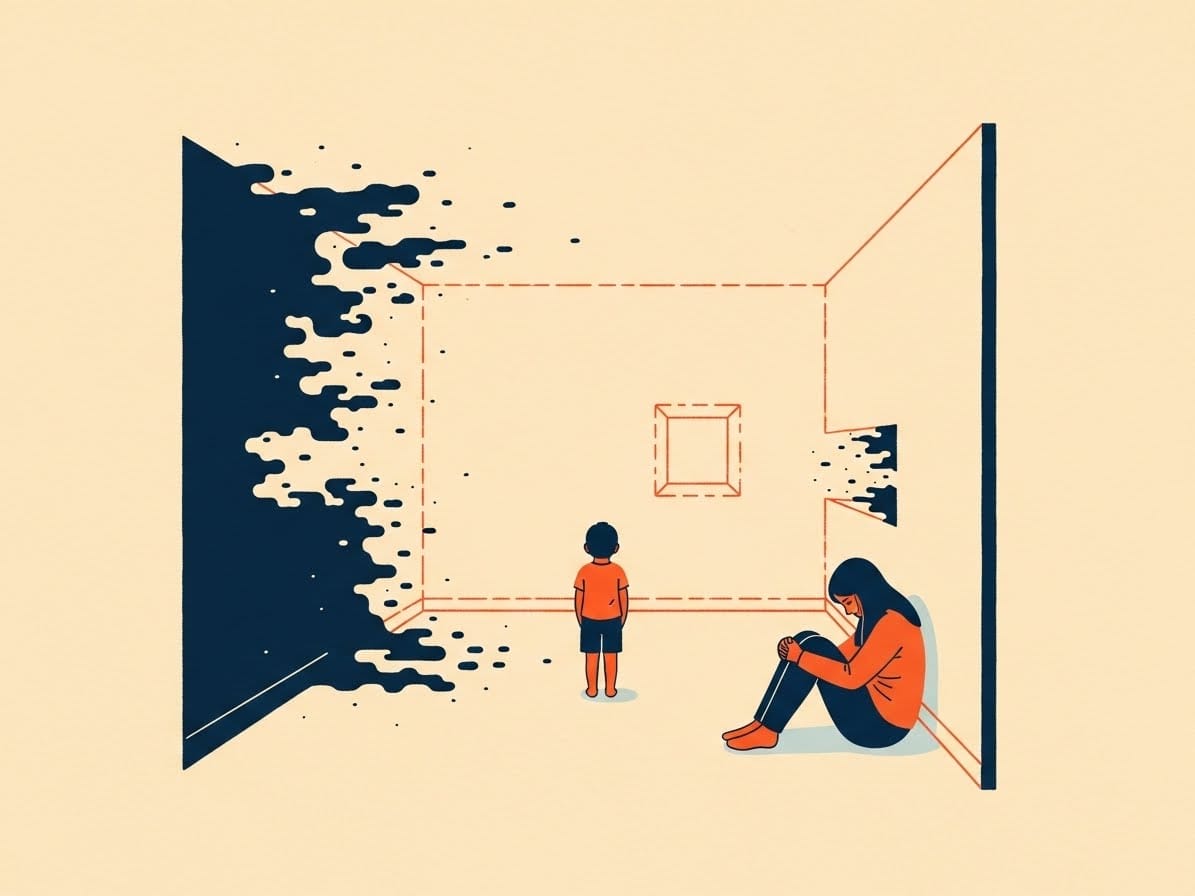
The mechanism is simple but painful. When we are too tired to say "No," we remove the very walls that make our children feel secure. As the researchers noted, avoiding conflict to keep the peace isn't a gift to the child. It is a symptom of our own exhaustion.
The Adolescent Anchor
This need for a sturdy leader doesn't end when they grow up. There is a misconception that teenagers need us to be their peers. In fact, the neurological need for "containment" peaks during adolescence.
Recent reports emphasize that while the "Gentle" movement focused heavily on validation, it often missed the other half of the equation: structure. Experts writing in Psychology Today in mid-2025 noted that "Gentle" was often interpreted as "no rules," leaving children without the scaffolding they need to develop self-regulation.
Adolescents don't need a best friend. They need what researchers call an Authoritative parent. This is someone who is warm, yes, but who also holds high expectations and firm limits.
The Pivot: Age-by-Age Leadership
We don't need to return to the authoritarian harshness of the past. We need to embrace Sturdy Leadership. You are kind, you are empathetic, but you ultimately steer the boat.
Here is what that looks like in practice:
1. The Toddler (Ages 1–4): Stop the Negotiation Loop
2. Middle Childhood (Ages 5–11): Define the Non-Negotiables
3. The Teenager (Ages 12–18): The Anchor, Not the Peer

Reclaiming Your Humanity
As we move through 2026, the goal is to stop performing a script.
If you are frustrated, it is okay for your child to see it. If you have reached your limit, say so. "I am feeling frustrated, so I am taking five minutes." This models true emotional regulation, acknowledging a feeling and managing it, rather than the robotic, fake calm that has exhausted us for too long.
It is time to put down the performance and pick up the anchor.
2024, Pezalla, A., & Davidson, R., "Trying to remain calm…but I do reach my limit sometimes": An exploration of the meaning of gentle parenting. PLOS ONE
2025, Teuber, Z., et al., Unwrapping the Dynamics of Parental Burnout and Genuine Expression During the Festive Season: A Dynamic Structural Equation Modeling Approach. Communications Psychology
2025, Yang, P., et al., When exhaustion meets permissiveness: a response surface analysis of parental burnout–parenting style interactions on childhood social anxiety. Frontiers in Pediatrics
2025, Rogers, A. "Will the Real Gentle Parents Please Stand Up?". Psychology Today

Most parents think lifting weights is dangerous for children. Twenty years of paediatric consensus disagree, and the reason has more to do with the nervous system than with muscle.

Parents are told that writing by hand is vital for their child's growing brain, and that screens are eroding it. We sort the viral headlines from the solid evidence, and find the real benefit belongs to one group above all: children still learning their letters.

Your child's fussiness for food is mostly inherited, and most of the things parents try in order to fix it make it worse. Find out why young children refuse food, why it is rarely a parent's fault, and the unglamorous method that genuinely changes how they eat.

Most of what shapes a young life turns out to be joyful and ordinary. A major new study shows what teenagers themselves treasure, and why the way they answer can tell you how they are really doing.