When should a child begin to train, and why the old fear was wrong
Most parents think lifting weights is dangerous for children. Twenty years of paediatric consensus disagree, and the reason has more to do with the nervous system than with muscle.
Most parents think lifting weights is dangerous for children. Twenty years of paediatric consensus disagree, and the reason has more to do with the nervous system than with muscle.

Parents are told that writing by hand is vital for their child's growing brain, and that screens are eroding it. We sort the viral headlines from the solid evidence, and find the real benefit belongs to one group above all: children still learning their letters.
Your child's fussiness for food is mostly inherited, and most of the things parents try in order to fix it make it worse. Find out why young children refuse food, why it is rarely a parent's fault, and the unglamorous method that genuinely changes how they eat.
New research reveals the hidden cost of school streaming: an "emotional legacy" that can shape a child's self-belief for years. We unpack why "fluid" groups often become fixed labels and provide the essential, evidence-backed questions you need to ask to keep your child’s potential open.

Throughout the primary school years, a common practice takes place that is deeply felt by children.
This is "ability grouping" - separating children into different sets for subjects like reading or mathematics. While these arrangements are intended to help teachers manage different learning speeds, research from the past five years suggests these groupings act as a powerful social force, influencing how children view themselves and their peers.
At The Inquisitive Parent, we believe that understanding these school structures allows you to be an even more effective partner in your child's education. In previous generations, school streaming was often a silent part of the background, something parents and children simply accepted. Today, however, we have the benefit of psychological data that helps us see the long-term impact of these early classifications across the entire primary journey.
The Science of "Why He Is in the Top Group"
A new landmark study published this year in the Journal of Experimental Child Psychology titled Children’s reasoning about ability differences offers a first clear view into the minds of children aged 6 to 11. The researchers, led by Melis Muradoglu, investigated how children explain the differences between those in "high-ability" groups and those in "low-ability" groups.

To understand their findings, we can look at two specific ways children categorize success:
The research found that children overwhelmingly favor internal explanations. They believe a peer is in a higher group because of something personal, most often their effort.
While it is encouraging that children value hard work, the study found a more complex reality. Children who believed these differences were stable - viewing "smartness" as a fixed trait - had lower expectations for their peers in lower groups.
They essentially stopped believing that a child in a "slower" group could ever move up.
The Emotional Legacy of Early Grouping
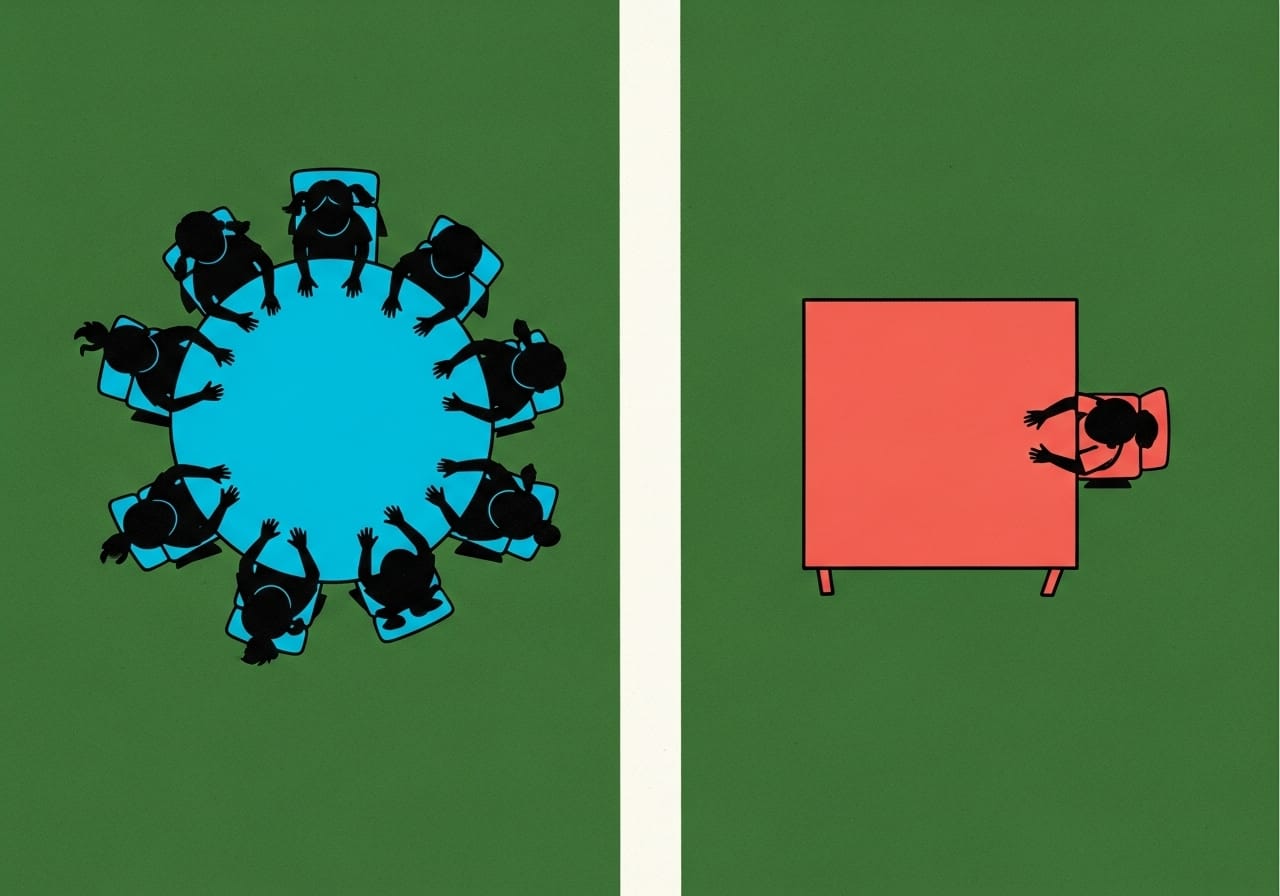
Beyond academic labels, grouping creates what researcher Deirdre McGillicuddy calls a "geography of affect". This describes how the physical and social organization of a classroom creates different emotional experiences. In many schools, being in a "high" group is associated with status and pride. Conversely, children in groups perceived as "lower" can feel a sense of social exposure.
The long-term impact of this environment was highlighted in a study published in Child Development. Researchers followed thousands of children from age seven into their early teenage years to see how grouping affected their development. They found that children placed in lower ability groups at age seven were more likely to show higher levels of hyperactivity and lower emotional well-being by the time they reached early adolescence.
This suggests that the "label" a child receives in the middle of primary school can have a lasting effect on their mental health and behavior long after the initial placement is made.

The Question of "Fluid" Grouping
A frequent reassurance from schools is that these groups are "fluid". However, a 2025 study titled Rigidity of class ability grouping practices in Australia found that in practice, these groups are often quite fixed throughout the primary years.
The researchers discovered that once a child is placed in a lower group, the curriculum they are given is often simplified. While intended to make work accessible, it can create a cycle where the child is not taught the advanced material required to move into a higher group.
This means a placement made in the early years can sometimes persist, not because the child lacks the ability to learn, but because the structure of the grouping has capped their exposure to challenging work.
Practical Steps for Support
As a parent, you are in a position to help your child navigate these structures with a healthy sense of self. Based on the research, here are ways to provide that support:

If you’re concerned about the school groups your child is allocated to, use this checklist. It provides targeted questions to move beyond general updates, allowing you to better understand the specific classroom structures affecting your child's potential.
Since we know from the 2025 Australian study that groups can sometimes become fixed, these questions help ensure your child has the opportunity to progress.
Research suggests that children in lower groups are sometimes given simplified work that prevents them from "catching up." These questions help ensure your child is being challenged.
Based on the "geography of affect" and the "social silo" research, these questions focus on your child's sense of belonging and identity.
Recalling the 2026 study on how children reason about ability, these questions help you understand the "inner monologue" the teacher might be encouraging.
It is helpful to remember that teachers often face immense pressure to manage large classes with varying needs. Approaching these questions with warmth and a spirit of partnership is usually the most effective way to support your child. You are simply seeking to understand how the classroom structure is supporting your child's long-term belief in their own potential.
By asking these literal, clear questions, you are helping the teacher see your child as an individual whose potential is constantly evolving, rather than a data point in a fixed group.
2026, Muradoglu, M., et al., Children’s reasoning about ability differences, Journal of Experimental Child Psychology
2024, McGillicuddy, D., Ability grouping: The invisible hand shaping relational dynamics and wellbeing in education?, Assessment and Development Matters
2021, Papachristou, E., et al., Ability-grouping and problem behavior trajectories in childhood and adolescence: Results from a U.K. population-based sample, Child Development
2025, Johnston, O., et al., Rigidity of class ability grouping practices in Australia, Research Papers in Education


Most parents think lifting weights is dangerous for children. Twenty years of paediatric consensus disagree, and the reason has more to do with the nervous system than with muscle.

Parents are told that writing by hand is vital for their child's growing brain, and that screens are eroding it. We sort the viral headlines from the solid evidence, and find the real benefit belongs to one group above all: children still learning their letters.

Your child's fussiness for food is mostly inherited, and most of the things parents try in order to fix it make it worse. Find out why young children refuse food, why it is rarely a parent's fault, and the unglamorous method that genuinely changes how they eat.

Most of what shapes a young life turns out to be joyful and ordinary. A major new study shows what teenagers themselves treasure, and why the way they answer can tell you how they are really doing.