When should a child begin to train, and why the old fear was wrong
Most parents think lifting weights is dangerous for children. Twenty years of paediatric consensus disagree, and the reason has more to do with the nervous system than with muscle.
Most parents think lifting weights is dangerous for children. Twenty years of paediatric consensus disagree, and the reason has more to do with the nervous system than with muscle.

Parents are told that writing by hand is vital for their child's growing brain, and that screens are eroding it. We sort the viral headlines from the solid evidence, and find the real benefit belongs to one group above all: children still learning their letters.
Your child's fussiness for food is mostly inherited, and most of the things parents try in order to fix it make it worse. Find out why young children refuse food, why it is rarely a parent's fault, and the unglamorous method that genuinely changes how they eat.
We sit with our children to help them with homework, but new research reveals this well-intentioned habit backfires. Here is why your physical presence causes the exact struggle you are trying to prevent.

Most of us spend a significant portion of our lives helping to educate our children. We sit beside them while they work through math equations, reading assignments, or writing tasks. In these moments, the urge to intervene is constant. When our child pauses or struggles with a word, we naturally lean closer to offer a hint, a correction, or a word of encouragement.
We do this because we want them to feel supported. But new research reveals that these good intentions are more likely to backfire, and by trying to help our children we may be unwittingly hindering their progress.
Previous generations of parents often expected children to complete schoolwork entirely independently, perhaps working at the kitchen table while adults managed other household tasks. Today, modern parenting culture tends toward the opposite; we like to get more directly involved, nervous perhaps that little moments of help can drive their academic success. We feel a profound responsibility to actively facilitate their learning.
However, you have likely noticed a specific, recurring pattern during these study sessions. A capable child who is usually bright suddenly stops processing information the exact moment you sit down to aid them.
For parents, this can become a little stressful. You sit down with the intention of being helpful, only to watch your child's competency evaporate. You start worrying that your child is becoming overly dependent on your prompts, or that they are secretly struggling to comprehend the material.
You might question your own ability to teach, wondering if you are explaining the concepts poorly, and then start to feel a little nervous, exposed even, and out of your depth. The resulting dynamic leads to mutual frustration: the parent feels ineffective, and the child feels pressured.

New research demonstrates this pause is not a behavioral issue, however. Nor is it a lack of intelligence in your child, or a sign of academic difficulty, or your child being stubborn, deciding not to let you help them.
Instead, it is a measurable, automatic biological reaction to the presence of an adult audience.
Simply put, just sitting next to your child physically alters how their brain processes information, systematically dismantling their ability to concentrate and finish the task in front of them. By watching our child do their homework, or any another task, we may be unwittingly compromising their ability to do it effectively. Our mere presence literally puts them off.
The Evidence: Proactive and Reactive Control
In 2025, Frick, Belletier, et al. published The effects of an unfamiliar experimenter on proactive and reactive control in children in the journal Scientific Reports, identifying the precise mechanism causing this processing halt. The researchers tested children aged five and nine to observe how the physical presence of an adult impacted their cognitive control. Cognitive control is the brain system responsible for focusing on a goal, ignoring distractions, and anticipating future events.
The children completed a series of cognitive tests under two conditions. In the first condition, the child worked entirely alone in a room. In the second condition, an unfamiliar adult sat in the room with them, looking at the child approximately 60 percent of the time.
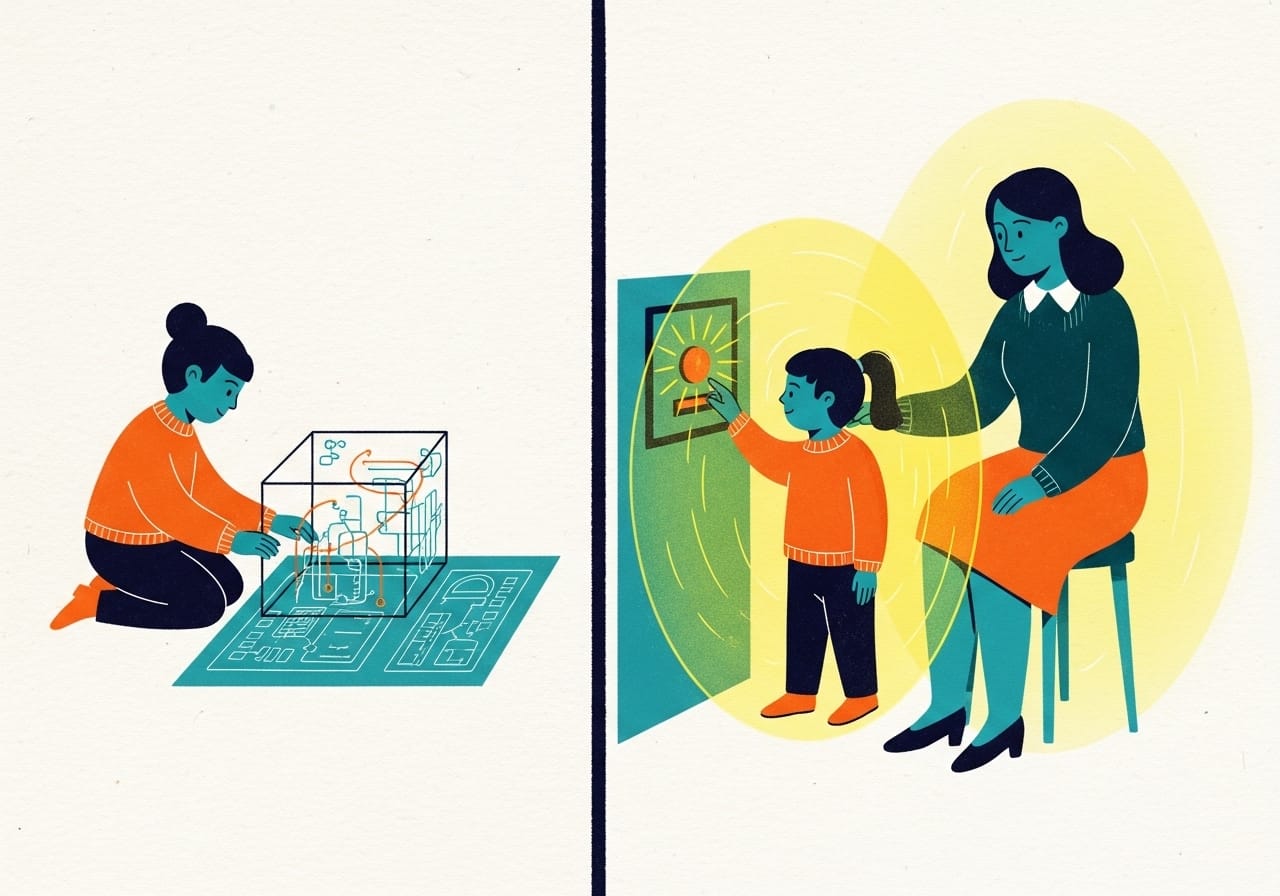
The findings were definitive. Children were slower to respond and took longer to complete tasks when the adult was in the room compared to when they worked alone.
Crucially, the researchers noted that the presence of the adult did not negatively affect the accuracy of the children's answers. The children did not make significantly more errors; they simply took much longer to arrive at the correct answer. This indicates that the child still possesses the required knowledge, but the physical presence of the adult slows their ability to access and utilize that knowledge.
To understand why this delay happens, we must divide cognitive control into two distinct biological processes: reactive control and proactive control.
Reactive control is the brain's ability to respond to an event after it has happened. It is a late-correction mechanism. If a child sees a red light illuminate on a screen and must press a button in response, or if they drop a pencil and instinctively catch it, they are using reactive control. It is a direct, immediate response to an external stimulus that requires minimal forward planning.
Proactive control is entirely different. It is the forward-thinking mental ability to look at a complex problem, hold a specific goal in working memory, plan the sequence of required moves, and execute them step-by-step without waiting for an external prompt. Reading a complex paragraph or solving a multi-step math equation relies heavily on proactive control. The brain must maintain focus on the end goal while actively filtering out irrelevant information.
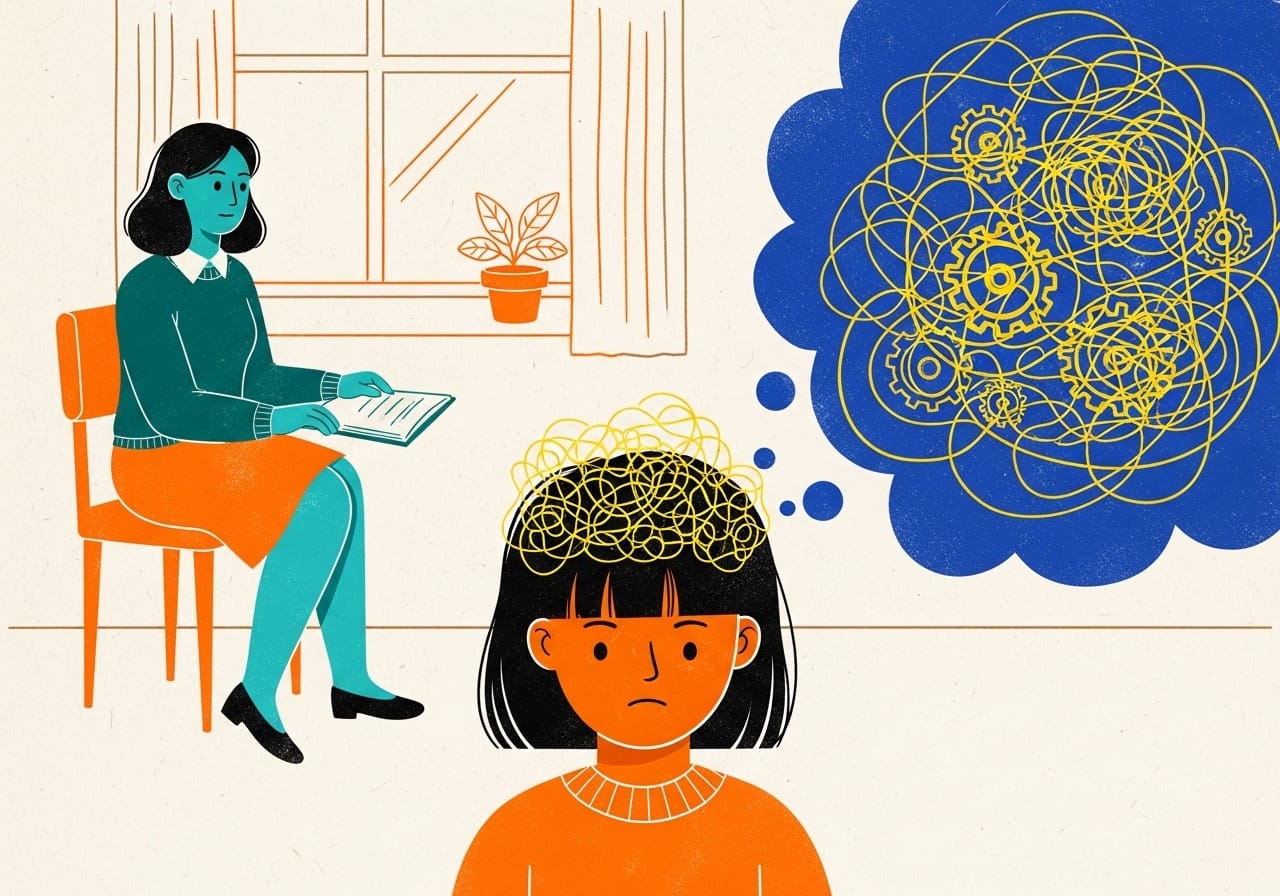
The 2025 study proved that the presence of an adult specifically and exclusively impairs a child’s proactive control. The adult's presence diverts the child's available cognitive resources away from anticipation and reflection.
When you sit next to your child, their ability to plan the next step stalls. The adult's physical proximity monopolizes a portion of the child's attention, reducing their capacity to keep the necessary information active in their working memory.
Neurological Markers of Self-Directed Control
Further research reveals something of how this disruption happens at the neurological level. In 2025, Chevalier and Frick published https://www.google.com/search?q=https://www.nature.com/articles/s41598-025-55860-9 in Developmental Science. The researchers examined how the brain manages self-directed tasks versus externally prompted tasks.
The researchers analyzed neural oscillatory markers - the rhythmic electrical activity in the brain - during task switching. Proactive control requires the brain to voluntarily initiate a shift in focus or strategy. This self-directed engagement is neurologically demanding. The study demonstrated that children exhibit distinct neural signatures when they successfully marshal the cognitive resources to proactively switch tasks without external cues.
When an adult is present, this self-directed neural engagement is interrupted. The human brain has a finite processing capacity. The introduction of a socially relevant variable (the observing parent) forces the brain to reallocate resources.
The child’s neurological system begins dedicating processing power to tracking your physical posture, monitoring your facial expressions, and anticipating your verbal prompts.
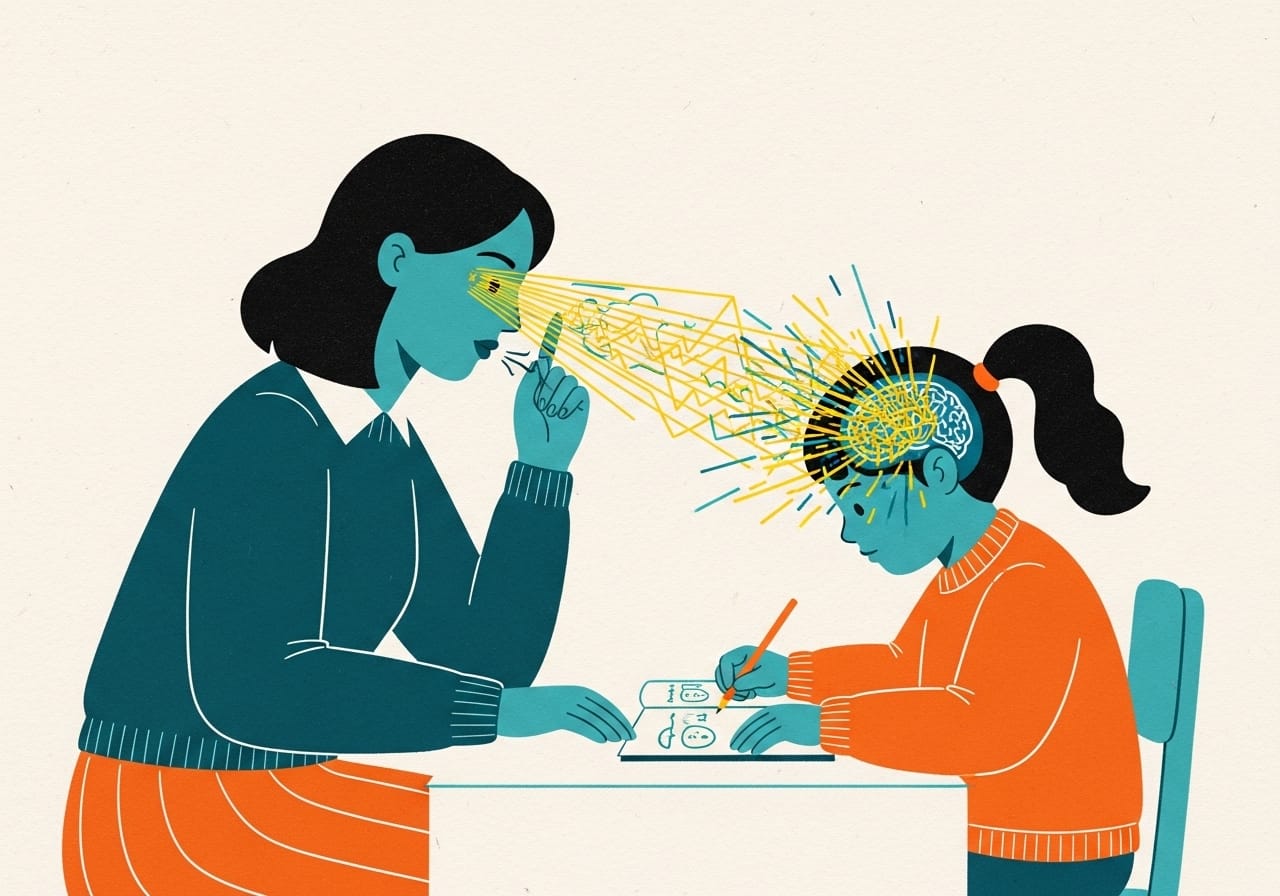
Because their brain is actively processing these social inputs, it physically cannot maintain the neural oscillations required for self-directed, proactive control. The child shifts from internal, voluntary task management to externally driven reactive control.
They stop planning the next step of the math equation because their brain is prioritizing the processing of your physical presence. They are waiting for your prompt because you have inadvertently become the primary stimulus in their environment.
The Evolutionary Context: A Uniquely Human Response
To understand the specificity of this biological reaction, it is useful to look at comparative cognitive research. In 2026, Frick, McEwen, and Seed published Chimpanzees' working memory is not affected by the presence and activity of zoo visitors in the journal Animal Cognition. This study measured how an observing audience impacted chimpanzees completing working memory tasks.
The results were entirely different from the human trials. The chimpanzees' cognitive control remained stable regardless of how many observers were present or how active the audience was. Their working memory did not stall, and their proactive control systems were not interrupted.
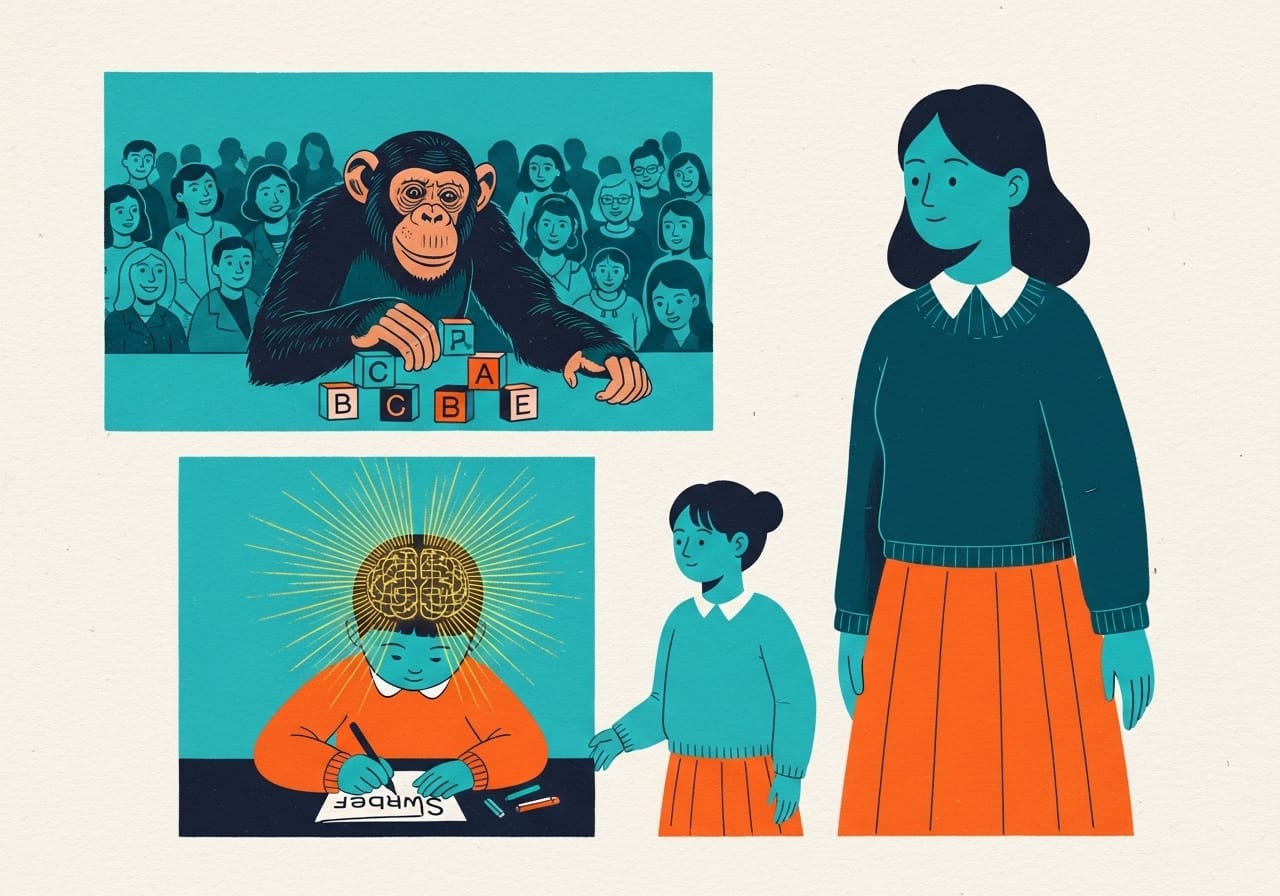
This comparative data helps isolate the exact nature of the effect in human children.
The processing delay observed at the kitchen table is not a basic animal stress response to being watched. It is a highly evolved, specifically human neurological reaction. The human brain has evolved an intense capacity for social monitoring and reading evaluative cues. When an adult sits down to help, the child's brain automatically prioritizes this social assessment over the mechanical task of solving the problem.
The Evaluative Context
The Frick et al. study noted that this interference effect was more pronounced in the 4-to-5-year-old age group compared to the 8-to-9-year-olds. As children develop, their neural networks slowly become more efficient at managing the demands of social presence while maintaining task focus. However, the interference persists throughout childhood.
A common initial reaction to these findings is to assume the data only applies to strangers in a laboratory setting. A parent naturally assumes their child is comfortable with them, meaning their presence should be calming and helpful.
However, the context of the interaction overrides basic familiarity. When you sit down to help with homework, you are take on the role of someone evaluating their effort. You are checking their work, looking for errors, and waiting to see if they understand the concept. Children are highly adept at detecting this evaluative state. Even if your tone is warm, encouraging, and supportive, the child's brain recognizes that their performance is being assessed.
This assessment triggers the shift in cognitive resources. The child moves from a state of independent academic processing into a state of managing your expectations. They become highly attuned to your physical cues. If you inhale sharply when they write the wrong number, shift your weight in your chair, or lean closer when they mispronounce a word, their brain prioritizes processing those social cues over solving the problem itself.
Instead of thinking it's good to help a child we think may be struggling with their homework, it may be better to realise that our attempts to help may actually be causing the struggle.

The Toolkit: Invisible Support
To allow your child to think clearly, you need to avoid giving the impression you are checking or evaluating their work. Here are three things you can do during homework sessions.
1. The "Parallel Working" Protocol
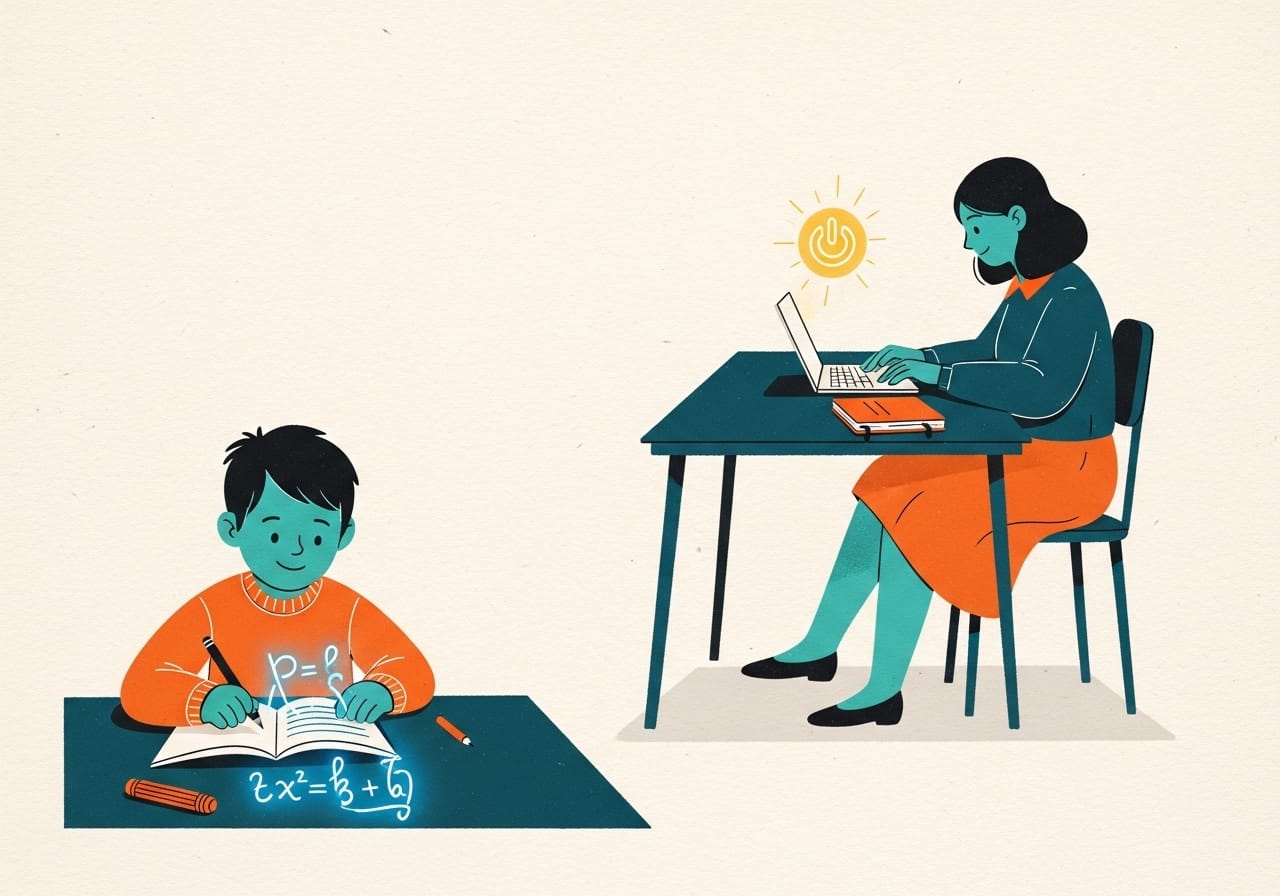
If your child requires you to be in the room, ensure you are engaged in your own cognitively demanding task. Do not sit directly next to them or face them. Sit at a separate table or the opposite end of the room and perform a task that clearly requires your full attention (paying bills, typing an email, reading a dense article). This signals to the child's brain that you are not actively evaluating them, allowing their neural resources to remain focused on their own work rather than monitoring your reactions.
2. The "Delayed Review" Protocol
Remove the immediate feedback loop. Instead of watching them solve an equation and correcting it in real-time, state clearly: "I am going to make dinner while you do these four problems. Leave them on the counter when you are done, and we will look at them together later." This removes your physical proximity during the critical phase of proactive planning. It allows them to make mistakes without the cognitive burden of managing your immediate physical response to those mistakes.
3. The "Physical Distance" Rule
When a child asks for help, do not lean over their shoulder or take their pencil. Over-the-shoulder positioning maximizes the child's need for social monitoring, as they cannot see your face but can hear your breathing and feel your shifts in posture. Instead, remain standing at a distance of at least three feet. Ask them to read the problem aloud to you. By maintaining physical distance and forcing them to verbalize the problem, you keep their proactive control engaged rather than allowing them to passively wait for you to solve it for them.
2026, Frick, A., McEwen, E., & Seed, A., Chimpanzees' working memory is not affected by the presence and activity of zoo visitors, Animal Cognition
2025, Chevalier, N. & Frick, A., Neural oscillatory markers of voluntary task switching: proactive engagement of self-directed control in children and adults, Developmental Science
2025, Frick, A., Belletier, C., et al., The effects of an unfamiliar experimenter on proactive and reactive control in children, Scientific Reports
2024, Frick, A., You are here! Rethinking children's executive function development in the presence of others, Child Development Perspectives.

Most parents think lifting weights is dangerous for children. Twenty years of paediatric consensus disagree, and the reason has more to do with the nervous system than with muscle.

Parents are told that writing by hand is vital for their child's growing brain, and that screens are eroding it. We sort the viral headlines from the solid evidence, and find the real benefit belongs to one group above all: children still learning their letters.

Your child's fussiness for food is mostly inherited, and most of the things parents try in order to fix it make it worse. Find out why young children refuse food, why it is rarely a parent's fault, and the unglamorous method that genuinely changes how they eat.

Most of what shapes a young life turns out to be joyful and ordinary. A major new study shows what teenagers themselves treasure, and why the way they answer can tell you how they are really doing.